
WHS Arrangements for Assisting with Maintaining Workplace Safety
Posted by SkillMaker in Dec, 2024
What is a concise description of WHS arrangements for maintaining workplace safety?

WHS arrangements involve the strategic planning and management of procedures to ensure the workplace remains safe and health hazards are minimized. This includes establishing safety protocols, training employees, ensuring compliance with legislation, and actively engaging staff in safety initiatives.
Why do people in enterprises need WHS arrangements for maintaining workplace safety?
Enterprises need WHS arrangements to create a safe working environment that protects employees from harm, reduces the risk of accidents, and ensures legal compliance. Effective WHS management enhances employee morale, reduces downtime from accidents, and promotes a positive business reputation.
“Implementing WHS arrangements is crucial for safeguarding employees and fostering a culture of safety and responsibility in the workplace.”
What are the key components or elements of WHS arrangements for maintaining workplace safety?
Key components of WHS arrangements include:
- Risk Assessment: Identifying hazards and assessing risks in the workplace.
- Control Measures: Implementing strategies to eliminate or reduce risks.
- Training and Education: Equipping employees with knowledge and skills for safety.
- Supervision and Reporting: Monitoring work practices and reporting incidents.
- Emergency Preparedness: Planning and preparing for potential emergency situations.
What key terms, with descriptions, relate to WHS arrangements for maintaining workplace safety?

Registered Trademark®
- Hazard: Anything that can cause harm to people.
- Risk: The probability and consequence of a hazard occurring.
- Hierarchy of Controls: A system for controlling risks in the workplace, ranked by effectiveness.
- Incident Report: Documentation of any event that results in or has the potential to result in injury or damage.
- Personal Protective Equipment (PPE): Clothing and equipment used to minimize exposure to hazards that cause serious workplace injuries and illnesses.
Who is typically engaged with operating or implementing WHS arrangements for maintaining workplace safety?
Health and safety officers, human resources managers, supervisors, and all employees have roles to play in implementing WHS arrangements. Each is responsible for understanding and applying the strategies and procedures that contribute to maintaining a safe workplace.
How do WHS arrangements for maintaining workplace safety align or integrate with other components of Workplace Safety?
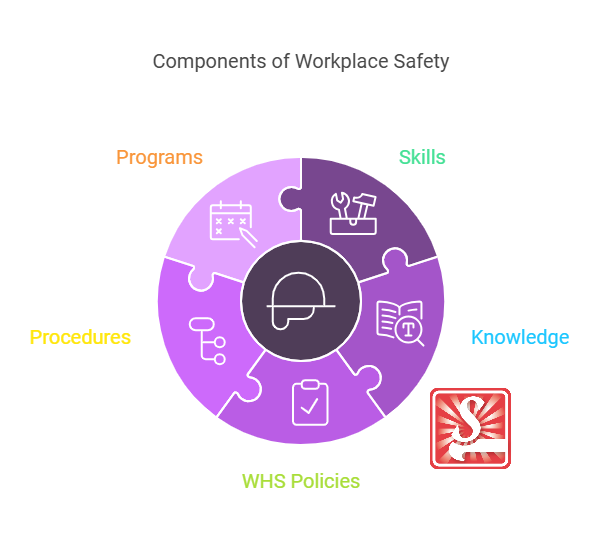
WHS arrangements integrate with other safety components such as occupational health assessments, ergonomic evaluations, and safety audits. By encompassing all aspects of workplace safety, WHS frameworks ensure comprehensive risk management and foster a culture of continuous safety improvement.
Where can the student go to find out more information about WHS arrangements for maintaining workplace safety?
What job roles would be knowledgeable about WHS arrangements for maintaining workplace safety?
Roles knowledgeable about WHS arrangements include:
- Health and Safety Officers
- Human Resources Managers
- Operations Managers
- Compliance Officers
- Supervisors and Team Leaders
What is WHS arrangements for maintaining workplace safety like in relation to sports, family, or schools?

In sports, WHS arrangements are like a team strategy, where a comprehensive game plan, training, and real-time adjustments ensure safety and victory. For families, it resembles household safety checks and routines keeping everyone safe in daily life. In schools, it mirrors educational safeguards and emergency procedures that ensure a secure environment for learning.
(The first edition of this post was generated by AI to provide affordable education and insights to a learner-hungry world. The author will edit, endorse, and update it with additional rich learning content.)
- About the Author
- More info

Workskill training for all

 Post Tagged with