
Timeline Commitments in Organising Schedules in Business Operations
Posted by Ashlee Ritchie in Jan, 2025
What is a concise description of timeline commitments when organising schedules in Business Operations?

Timeline commitments in organising schedules entail setting specific timeframes within which tasks, projects, or objectives need to be completed. This involves prioritizing activities, allocating resources efficiently, and ensuring all members deliver within set deadlines to maintain workflow continuity and meet business objectives.
Why do people in enterprises need timeline commitments when organising schedules?
People in enterprises need timeline commitments when organising schedules to enhance productivity and operational efficiency. By keeping projects on track, timeline commitments ensure deadlines are met, resources are optimally utilized, and client satisfaction is maintained, leading to improved overall business performance.
“Adhering to timeline commitments fosters discipline and accountability, paving the way for successful task completion and business growth.”
What are the key components or elements of timeline commitments when organising schedules?
Key components of timeline commitments when organising schedules include:
- Task Prioritisation: Identifying and focusing on high-impact activities.
- Deadline Setting: Establishing clear milestones and due dates.
- Resource Allocation: Ensuring appropriate tools and staff are assigned.
- Monitoring and Evaluation: Regularly assessing progress and making necessary adjustments.
- Communication Framework: Keeping all stakeholders informed and aligned.
What key terms, with descriptions, relate to timeline commitments when organising schedules?

Registered Trademark®
- Milestones: Key points in the schedule marking significant phases of a project.
- Gantt Charts: Visual representations of a schedule, showing timelines and dependencies.
- Critical Path: Sequence of crucial steps determining the project duration.
- Slack Time: The amount of time a task can be delayed without affecting the project deadline.
- Dependency: Tasks reliant on the completion of preceding tasks.
Who is typically engaged with operating or implementing timeline commitments when organising schedules?
Project managers, team leaders, schedulers, and operations managers are typically involved in implementing timeline commitments when organising schedules. They coordinate tasks, manage resources, and ensure deadlines are adhered to within the organisation.
How does this timeline commitments integrate with other components of Business Operations in Australia?
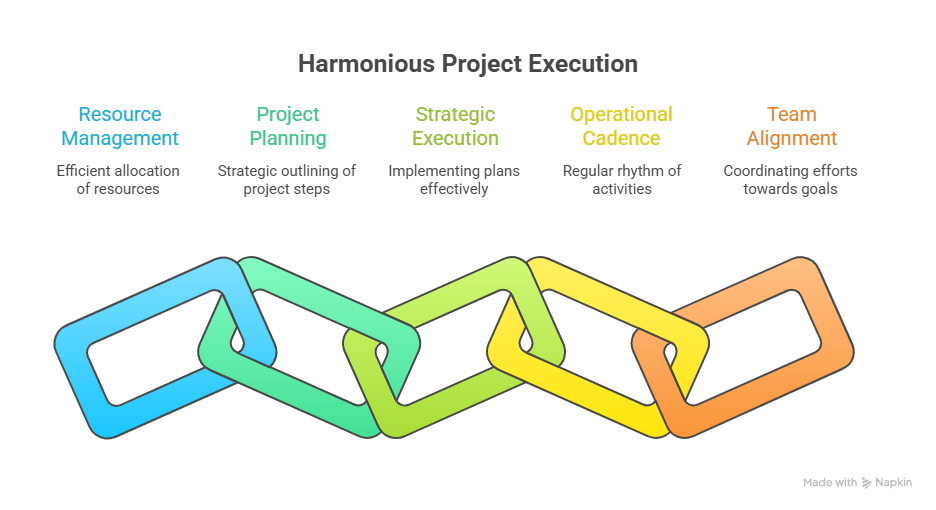
Timeline commitments align with resource management, project planning, and strategic execution, ensuring that all components work harmoniously. Effective scheduling upholds the structure by setting a cadence for operational activities and aligning team efforts towards shared objectives.
Where can the student go to find out more information about timeline commitments when organising schedules?
Links
What job roles would be knowledgeable about timeline commitments in organising schedules?
Roles include:
- Project Managers
- Schedulers
- Operations Managers
- Team Leaders
- Resource Coordinators
What is timeline commitments when organising schedules like in relation to sports, family, or schools?

In sports, timeline commitments resemble a well-planned training schedule, ensuring athletes are peak-ready for competition. In a family context, it corresponds to managing daily routines so household tasks are completed timely. In schools, it reflects structured lesson plans that must be delivered in specific periods to achieve educational outcomes effectively.
- About the Author
- More info

A TAFE students who has successfully completed the unit of competency BSBOPS303 Organise schedules training materials in her Certificate III in Business studies.
Ashlee Ritchie is an emerging culinary professional with over four years of industry experience across high-volume restaurants, event venues, and food production environments. She has held roles including Line Cook, Chef de Partie, and Apprentice Chef, developing practical expertise in larder, fryer, pizza, and pasta stations while consistently delivering 50–100+ dishes per service. Her background includes large-scale catering and production, preparing up to 300 kilograms of food daily and contributing to events serving more than 400 guests.
Ashlee holds a Certificate III in Commercial Cookery and a Certificate II in Hospitality, and is currently completing a Certificate III in Business to strengthen her understanding of operations and organisational planning. She also maintains current food safety and chemical handling certifications.
Known for her attention to detail, strong communication, and reliability in fast-paced environments, Ashlee brings a disciplined, process-driven approach to her work. Her combined culinary and business perspective informs her writing, with a focus on practical insights, kitchen efficiency, and real-world food service operations.

 Post Tagged with