
Risk Assessment Outcomes in Assisting with Maintaining Workplace Safety
Posted by SkillMaker in Dec, 2024
What is a concise description of risk assessment outcomes in maintaining workplace safety?

Risk assessment outcomes in maintaining workplace safety involve identifying potential hazards, evaluating their risks, and implementing strategies to mitigate them. These procedures aim to protect employees and assets by ensuring a safe working environment through systematic examination and prevention measures.
Why do people in enterprises need risk assessment outcomes in workplace safety?
Enterprises need risk assessment outcomes to foresee and prevent accidents, comply with regulatory requirements, and foster a culture of safety. Conducting and acting on risk assessment outcomes reduces the likelihood of workplace incidents, minimizes financial loss, and supports employee well-being and productivity.
“Effective risk assessment outcomes are the cornerstone of workplace safety, protecting employees and enhancing operational efficiency.”
What are the key components or elements of risk assessment outcomes in workplace safety?
Key components of risk assessment outcomes include:
- Hazard Identification: Recognizing potential sources of harm in the workplace.
- Risk Analysis: Evaluating the likelihood and consequences of identified hazards.
- Risk Control Measures: Implementing actions to reduce or eliminate risks.
- Documentation and Reporting: Recording analysis results and actions taken.
- Continuous Review: Regular reassessment to ensure ongoing effectiveness.
What key terms, with descriptions, relate to risk assessment outcomes in workplace safety?

Registered Trademark®
- Hazard: A source of potential harm or adverse health effect on a person or persons.
- Risk: The probability and impact of a hazard leading to an adverse event.
- Risk Mitigation: Strategies designed to reduce or eliminate the impact of risks.
- Hierarchy of Controls: System of strategies to control risks, ranked by effectiveness.
- Incident Reporting: Documenting workplace incidents to facilitate analysis and prevention.
Who is typically engaged with operating or implementing risk assessment outcomes in workplace safety?
Occupational health and safety officers, risk managers, supervisors, and team leaders typically engage in the operation and implementation of risk assessment outcomes. These roles ensure that all hazards are identified and appropriately managed to maintain safety and minimize risks.
How do risk assessment outcomes integrate with other components of Workplace Safety?
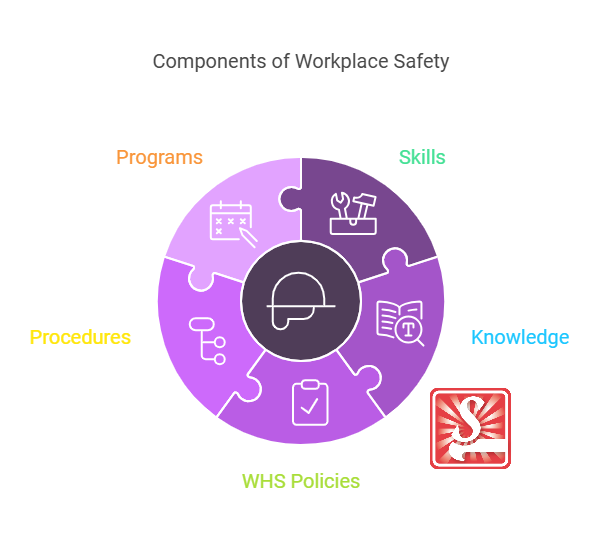
Risk assessment outcomes integrate with workplace safety by providing the data required to implement safety programs and policies effectively. They underpin the development of training programs, emergency response strategies, and health and safety audits, ensuring compliance and promoting a culture of safety.
Where can the student go to find out more information about risk assessment outcomes in workplace safety?
What job roles would be knowledgeable about risk assessment outcomes in workplace safety?
Roles include:
- Occupational Health and Safety Specialists
- Safety Inspectors
- Compliance Officers
- Risk Managers
- Site Supervisors
What are risk assessment outcomes in workplace safety like in relation to sports, family, or schools?

In sports, risk assessment outcomes are akin to pre-game strategies that assess an opponent’s strengths and weaknesses to ensure a team’s best chance of success. In a family context, it resembles planning a safe backyard play environment, ensuring all hazards are addressed. In schools, it reflects comprehensive emergency drills, where potential dangers are evaluated, and proper safety protocols are taught and practiced.
(The first edition of this post was generated by AI to provide affordable education and insights to a learner-hungry world. The author will edit, endorse, and update it with additional rich learning content.)
- About the Author
- More info

Workskill training for all

 Post Tagged with