
Navigating the Environmental Impacts of Receiving, Storing, and Maintaining Stock
Posted by SkillMaker in Jan, 2025
What is a concise description of navigating environmental impacts in stock management?

Addressing environmental impacts in stock management involves identifying and mitigating the adverse effects of activities related to receiving, storing, and maintaining stock. This includes implementing practices that reduce waste, conserve resources, and minimize pollution, thereby fostering sustainable operations within hospitality and catering enterprises.
Why do people in enterprises need to navigate environmental impacts in stock management?
Businesses are increasingly held accountable for their environmental footprint. By addressing the environmental impacts of stock management, enterprises can reduce waste, conserve energy, and enhance their reputational sustainability. This proactive approach not only helps in regulatory compliance but also appeals to eco-conscious consumers, providing a competitive edge in the marketplace.
“Addressing environmental impacts in stock management isn’t just ethical—it’s imperative for sustainable, responsible hospitality practices.”
What are the key components or elements of addressing environmental impacts in stock management?
The key components for managing stock with an eye towards its environmental ramifications include:
- Efficient Inventory Management: Reducing overstocking and spoilage to minimise waste.
- Sustainable Packaging: Using degradable and recyclable materials.
- Energy Conservation: Optimising storage conditions to reduce energy use.
- Waste Management: Recycling and composting stock by-products.
- Transport Efficiency: Minimising carbon footprint through optimal logistics.
What key terms, with descriptions, relate to environmental impacts in stock management?

Registered Trademark®
- Carbon Footprint: The total greenhouse gas emissions caused directly or indirectly by a business’s activities.
- Sustainable Practices: Operations designed to reduce environmental impact and ensure resources for future generations.
- Circular Economy: An economic system aimed at minimising waste and making the most of resources.
- Eco-Efficiency: Creating more goods and services while using fewer resources and creating less waste and pollution.
- Lifecycle Analysis: Assessing the environmental impacts of all stages in a product’s life from cradle to grave.
Who is typically engaged with operating or implementing environmentally conscious stock management?
Warehouse managers, supply chain coordinators, sustainability officers, and procurement specialists are chiefly involved in driving environmentally friendly stock management. These roles focus on implementing sustainable practices and ensuring that stock processes align with environmental objectives.
How do environmental considerations in stock management align with other aspects of Hospitality and Catering?
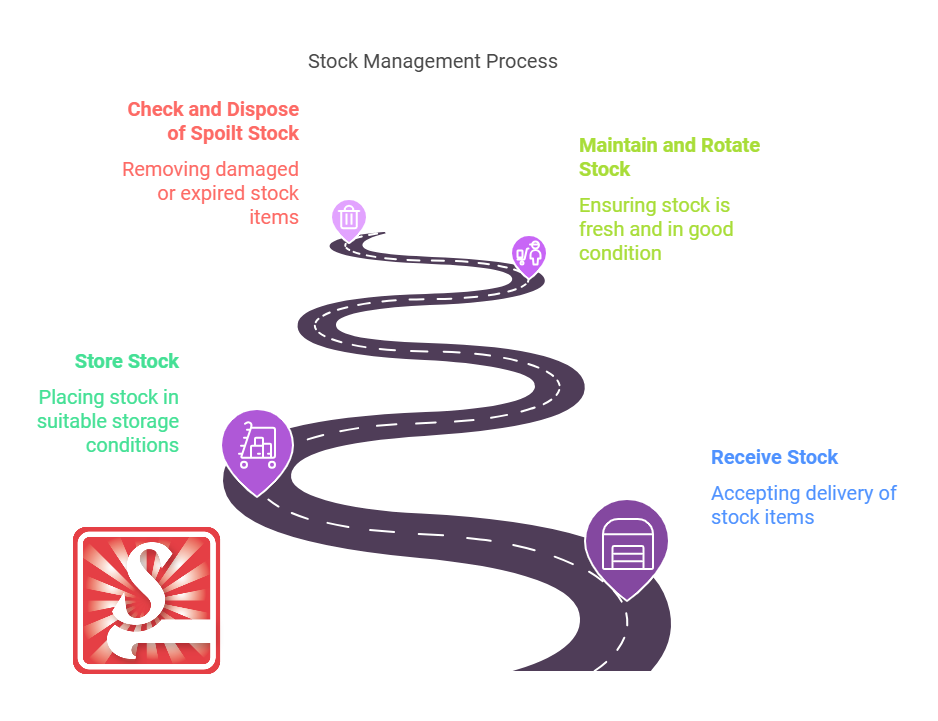
In hospitality, reducing waste, energy conservation, and sustainable sourcing improve efficiency and cost-effectiveness. Environmentally-conscious stock management aligns with these practices by promoting a holistic approach to sustainability, from menu planning and guest experiences to waste disposal and local sourcing.
Where can the student go to find out more information about environmentally-conscious stock management?
- Australian Government – Sustainability Information
- Sustainability Victoria
- Business Environmental Management Planning
What job roles would be knowledgeable about environmentally-conscious stock management?
Roles include:
- Sustainability Coordinators
- Supply Chain Managers
- Environmental Compliance Officers
- Procurement Specialists
- Logistics Managers
What is environmentally conscious stock management like in relation to sports, family, or schools?

In sports, it’s akin to a team ensuring their training and resources are sustainable for long-term success. For a family, it represents the balance of resources to maintain a household without waste. In schools, it reflects teaching students the value of sustainability, thereby preparing eco-conscious citizens for the future.
(The first edition of this post was generated by AI to provide affordable education and insights to a learner-hungry world. The author will edit, endorse, and update it with additional rich learning content.)
- About the Author
- More info

Workskill training for all

 Post Tagged with