
Future Access, Retrieval, and Storage in the Printing and Graphic Arts Sectors
Posted by SkillMaker in Mar, 2025
What is a concise description of future access, retrieval, and storage in the printing and graphic arts sectors?

Future access, retrieval, and storage within the printing and graphic arts sectors involve creating systems that ensure data and digital content are easily accessible, efficiently retrievable, and securely stored for long-term use. This encompasses adopting advanced technologies to manage digital assets, streamline workflows, and maintain data integrity.
Listen to this article as a podcast
Why do people in the Printing and Graphics industry need future access, retrieval, and storage?
In the rapidly evolving printing and graphic arts industry, having effective systems for future access, retrieval, and storage is crucial. These systems ensure that creative and business assets are maintained with accuracy and speed, supporting operations by preventing data loss, fostering collaboration, and adapting to technological advancements.
“Without efficient access, retrieval, and storage, valuable creative assets can be lost, impeding innovation and productivity.”
What are the key components or elements of future access, retrieval, and storage in the printing and graphic arts sectors?
The key components include:
- Data Management Systems: Software and protocols for organising and managing digital content.
- Cloud Storage Solutions: Scalable platforms for secure, remote data storage.
- Metadata Tagging: Labelling content with descriptive information for easy retrieval.
- Backup and Recovery Mechanisms: Strategies for data protection and recovery from loss.
- Automation Tools: Software to streamline data storage and retrieval processes.
What key terms, with descriptions, relate to future access, retrieval, and storage in the printing and graphic arts sectors?

Registered Trademark®
- Digital Asset Management (DAM): Systems used for organising, storing, and retrieving rich media assets.
- Archiving: The process of preserving digital files for long-term storage and access.
- Encryption: Security technology for protecting data from unauthorized access.
- Cloud Computing: Utilising remote servers for storage and processing of data, facilitated over the internet.
- Version Control: Systems that manage changes to digital assets and record each version of a file.
Who is typically engaged with operating or implementing future access, retrieval, and storage systems?
IT professionals, digital asset managers, and system administrators within the printing and graphic arts sectors are often tasked with the operation and implementation of future access, retrieval, and storage systems. These experts ensure that systems are efficient, secure, and aligned with industry requirements.
How does future access, retrieval, and storage align or integrate with other components of the Printing and Graphics industry in Australia?
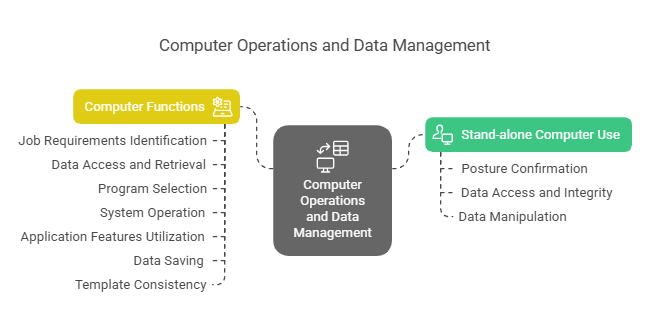
Future access, retrieval, and storage systems are integral to the broader Printing and Graphics industry by supporting workflow efficiency, maintaining data integrity, and enhancing collaboration. These systems work closely with design software, project management tools, and digital marketing platforms to streamline operations and improve productivity.
Where can the student go to find out more information about future access, retrieval, and storage in the printing and graphic arts sectors?
What job roles would be knowledgeable about future access, retrieval, and storage in the Printing and Graphics industry?
Roles include:
- Digital Asset Managers
- IT Specialists
- System Administrators
- Data Security Officers
- Project Managers
What is future access, retrieval, and storage like in relation to sports, family, or schools?

In relation to sports, future access, retrieval, and storage resemble a well-organized playbook and training schedule that ensures the team remains prepared and informed. In a family context, it mirrors keeping a neatly catalogued photo archive that preserves memories for future enjoyment. In schools, it parallels maintaining educational resources accessible for both educators and students to streamline learning.
(The first edition of this post was generated by AI to provide affordable education and insights to a learner-hungry world. The author will edit, endorse, and update it with additional rich learning content.)
(Skillmaker – 2025)- About the Author
- More info

Workskill training for all

 Post Tagged with