
End-of-Shift Procedures for Cleaning Kitchen Premises and Equipment
Posted by SkillMaker in Jan, 2025
What is a concise description of end-of-shift procedures when cleaning kitchen premises and equipment?
End-of-shift cleaning procedures for kitchen premises and equipment involve systematic cleaning and sanitisation tasks performed at the end of each workday to ensure a hygienic environment for food preparation. This process includes cleaning surfaces, equipment, and cooking utensils, as well as properly disposing of waste, maintaining order, and ensuring compliance with health and safety standards.
Why do people in enterprises need end-of-shift procedures for cleaning kitchen premises and equipment?
People in enterprises need end-of-shift cleaning procedures to uphold food safety standards, prevent contamination, and create a healthy working environment. Proper cleaning ensures compliance with health regulations, prolongs the life of kitchen equipment, and improves workplace safety and efficiency by minimizing the risk of accidents or pest infestations. This also contributes to maintaining a professional image and fostering customer trust and satisfaction.
“End-of-shift procedures ensure a safe, sanitised kitchen environment, essential for quality food service and compliance with health standards.”
What are the key components or elements of end-of-shift procedures for cleaning kitchen premises and equipment?
Key components of end-of-shift cleaning procedures include:
- Surface Cleaning: Wiping down counters, tables, and other surfaces to remove spills and debris.
- Equipment Sanitisation: Cleaning and sanitising cookware, utensils, and machinery used during the shift.
- Floor Cleaning: Sweeping and mopping to remove food particles and maintain hygiene.
- Waste Disposal: Removing rubbish and ensuring proper disposal to prevent odours and pests.
- Inventory Checks: Replenishing cleaning supplies and preparing equipment for the next shift.
What key terms, with descriptions, relate to end-of-shift procedures when cleaning kitchen premises and equipment?

Registered Trademark®
- Sanitisation: The process of reducing microbial load on kitchen surfaces and equipment to safe levels.
- Hygiene Standards: Guidelines to ensure cleanliness and prevent food-borne illnesses.
- Follow-up Maintenance: Routine checks and maintenance tasks to prepare equipment for future use.
- Food Safety Compliance: Adhering to legal and organisational standards for safe food handling.
- PPE (Personal Protective Equipment): Safety gear to protect workers during cleaning tasks.
Who is typically engaged with operating or implementing end-of-shift procedures for cleaning kitchen premises and equipment?
Kitchen staff, including chefs, cooks, kitchen hands, and cleaning personnel, are typically responsible for implementing end-of-shift cleaning procedures. These roles collaborate to ensure every section of the kitchen meets required hygiene and safety standards before closing.
How do end-of-shift procedures for cleaning kitchen premises and equipment align or integrate with other components of Hospitality and Catering?
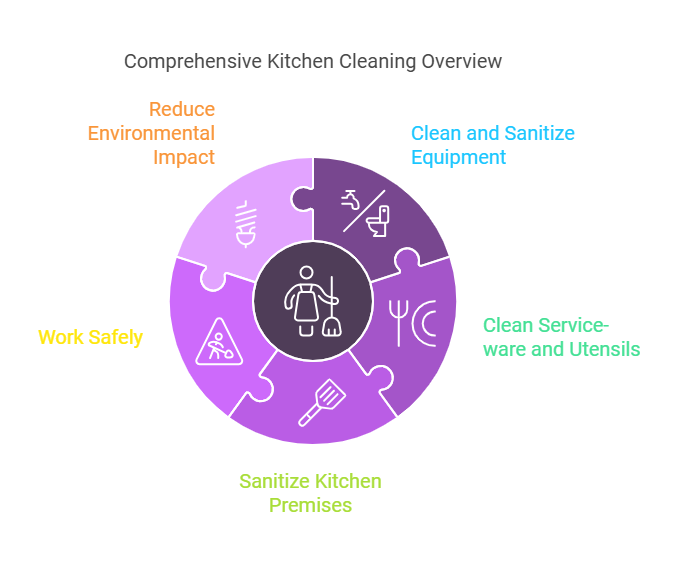
End-of-shift cleaning procedures integrate seamlessly with inventory management and food preparation processes by ensuring all equipment is sanitised and ready for the next day. These procedures support operational efficiency and quality control, vital components of overall food service excellence. Additionally, by maintaining cleanliness standards, they align with customer service goals by influencing the quality of service and presentation.
Where can the student go to find out more information about end-of-shift procedures for cleaning kitchen premises and equipment?
- Food Standards Australia and New Zealand
- Standards Australia for cleaning and sanitation
- Safe Work Australia’s guidelines for kitchen safety
What job roles would be knowledgeable about end-of-shift procedures for cleaning kitchen premises and equipment?
Roles include:
- Head Chefs
- Kitchen Supervisors
- Cleaning Staff
- Health and Safety Officers
- Facilities Managers
What are end-of-shift procedures for cleaning kitchen premises and equipment like in relation to sports, family, or schools?

In relation to sports, end-of-shift cleaning routines are like an athlete cooling down and stretching after a game, ensuring they are ready for the next challenge. In a family context, it’s akin to tidying up after dinner, maintaining a clean and organised household. When considering schools, it reflects the end-of-day classroom cleanup, setting the stage for a productive learning environment the following day.
(The first edition of this post was generated by AI to provide affordable education and insights to a learner-hungry world. The author will edit, endorse, and update it with additional rich learning content.)
- About the Author
- More info

Workskill training for all

 Post Tagged with