
Incident Response Debrief: Mastering Emergency Situations in Sport and Recreation
Posted by SkillMaker in Dec, 2024
What is a concise description of incident response debrief in emergency situations?
The incident response debrief is a critical analysis and discussion session that follows an emergency situation, aimed at evaluating the response actions, identifying successes and areas for improvement, and learning from the incident to enhance future emergency preparedness. It includes structured reflection on the event, documentation, and feedback sessions with all involved responders in the sport and recreation context.
Why do people in sport and recreation enterprises need incident response debriefs during emergency situations?
Engagement in an incident response debrief ensures that sport and recreation enterprises learn from emergency situations to safeguard participant safety and improve outcomes in future incidents. These debriefs are vital for recognizing effective responses, understanding what went wrong, and applying those insights to refine emergency protocols, which leads to enhanced safety, efficiency, and preparedness.
“An effective incident response debrief is pivotal in transforming experiences into actionable insights, ensuring enhanced readiness and resilience for future emergencies in sport and recreation.”
What are the key components or elements of incident response debrief during emergency situations?
Key components of an incident response debrief include:
- Reviewing Event Details: Assessing timeline, actions taken, and responses given.
- Identifying Successes and Failures: Highlighting what worked well and recognising areas needing improvement.
- Gathering Feedback: Collecting insights and opinions from all responders and participants.
- Documenting Findings: Creating a comprehensive report detailing lessons learned.
- Action Planning: Developing strategies to address issues and enhance future responses.
What key terms, with descriptions, relate to incident response debrief during emergency situations?

Registered Trademark®
- Debriefing Protocol: Guidelines for conducting effective reviews post-incident.
- Post-Event Analysis: The assessment of data and actions after emergency responses.
- Lessons Learned: Insights gained from reviewing incident responses.
- Continuous Improvement: Ongoing improvements to processes based on debrief findings.
- Emergency Management Plan (EMP): A framework outlining planned responses to emergencies.
Who is typically engaged with operating or implementing incident response debrief during emergency situations?
Incident response debriefs typically involve managers, emergency coordinators, team leaders, and all on-ground staff who were part of the situation. Engaging the full team ensures diverse perspectives are considered for comprehensive review and improvement recommendations.
How does incident response debrief during emergency situations align or integrate with other components of Sport and Recreation?
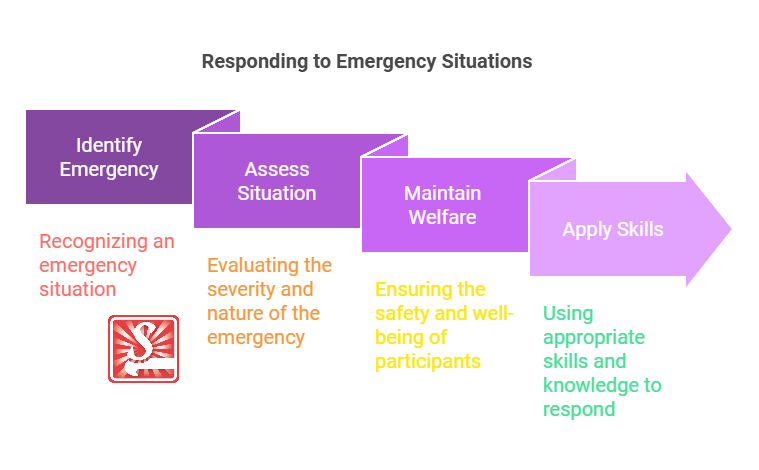
Incident response debriefs in the sport and recreation sector are tightly integrated with regular safety audits, risk management, and training sessions. The insights gained from debriefs inform these areas by updating protocols, enhancing training content, and reinforcing safety culture across all activities and events.
Where can the student go to find out more information about incident response debrief in emergency situations?
- Government resources on Emergency Management Australia
- Australian Sports Commission Resources
- WorkSafe Queensland Guidelines
What job roles would be knowledgeable about incident response debrief in emergency situations?
Roles familiar with incident response debriefing include:
- Emergency Management Officers
- Safety Coordinators
- Recreation Centre Managers
- Event Safety Officers
- Risk Assessors
What is incident response debrief in emergency situations like in relation to sports, family, or schools?

In sports, an incident response debrief is like a team’s post-game analysis where strategies and plays are evaluated to improve future performance.
In a family, it’s akin to a family meeting used to address a household issue by discussing what happened and how to handle similar situations better.
At schools, debriefs resemble teacher workshops where educational methods are reviewed and refined to enhance teaching effectiveness and student outcomes.
(The first edition of this post was generated by AI to provide affordable education and insights to a learner-hungry world. The author will edit, endorse, and update it with additional rich learning content.)
- About the Author
- More info

Workskill training for all

 Post Tagged with