
Future Response Improvements in Emergency Situations
Posted by SkillMaker in Dec, 2024
What is a concise description of future response improvements in emergency situations?
Future response improvements in emergency situations involve developing and implementing advanced strategies, technologies, and methodologies to better prepare for, respond to, and recover from emergencies. These improvements aim to increase the effectiveness, efficiency, and speed of responses to minimise potential harm and ensure the safety of individuals and communities.
Why do people in enterprises need future response improvements in emergency situations?
Enterprises need future response improvements in emergency situations to enhance their capacity to handle unexpected events with minimal disruption to operations and safety. By staying ahead with innovative solutions and proactive measures, they can protect their workforce, safeguard assets, and maintain service continuity, thereby reducing the potential impact of emergencies.
“Investing in future response improvements is investing in resilience, ensuring that businesses and communities can adapt and thrive, even in challenging scenarios.”
What are the key components or elements of future response improvements in emergency situations?
Key components of future response improvements in emergency situations include:
- Technology Integration: Use of advanced communication tools and AI for real-time data analysis.
- Training and Simulations: Regular drills and exercises to enhance readiness and coordination.
- Collaborative Frameworks: Partnerships with governmental bodies, NGOs, and private sectors.
- Community Involvement: Empowering local communities through education and participation in emergency planning.
- Continuous Improvement: Ongoing assessment and updating of protocols and procedures based on past experiences and new insights.
What key terms, with descriptions, relate to future response improvements in emergency situations?

Registered Trademark®
- Early Warning Systems: Technology to detect and warn against impending emergencies.
- Resilience Building: Strategies to strengthen the ability to withstand and recover from emergencies.
- Risk Assessment: The process of identifying and evaluating potential hazards.
- Incident Command System (ICS): A standardized approach to command, control, and coordination during emergencies.
- Interoperability: The capability of different systems and organizations to work together.
Who is typically engaged with operating or implementing future response improvements in emergency situations?
Emergency management professionals, government agencies, organisational health and safety officers, and community leaders are typically involved in operating or implementing future response improvements in emergency situations. Their roles are critical in crafting and executing strategies that promote preparedness and effective response.
How do future response improvements in emergency situations align or integrate with other components of Sport and Recreation?
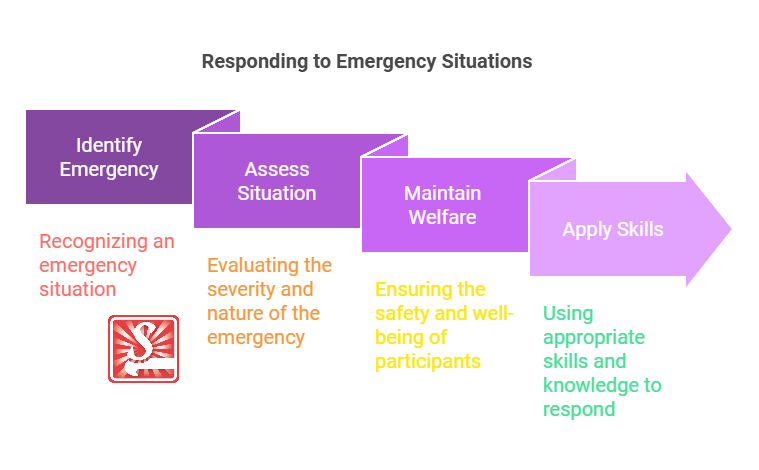
Future response improvements integrate with Sport and Recreation by ensuring that venues and events are safer and more secure, addressing potential risks, and enabling swift response if emergencies occur. This synergy amplifies the overall environment’s resilience while enhancing participant and spectator confidence and satisfaction.
Where can the student go to find out more information about future response improvements in emergency situations?
- Australian Government – Emergency Management
- Australian Red Cross – Emergency Services
- Australian Resilience Centre
What job roles would be knowledgeable about future response improvements in emergency situations?
Roles include:
- Emergency Response Coordinators
- Occupational Health and Safety Officers
- Risk Management Consultants
- Public Safety Officials
- Community Preparedness Coordinators
What are future response improvements in emergency situations like in relation to sports, family, or schools?

In sports, future response improvements ensure athletic events are managed safely, with comprehensive emergency plans that can rapidly adapt to changing situations.
In a family context, it involves everyone knowing what to do in emergencies, thus fostering a secure and prepared household.
At schools, it integrates safety drills and crisis management education to protect students and staff, ensuring that educational environments remain a safe space for learning even during emergencies.
(The first edition of this post was generated by AI to provide affordable education and insights to a learner-hungry world. The author will edit, endorse, and update it with additional rich learning content.)
- About the Author
- More info

Workskill training for all

 Post Tagged with