
Effective Group Control Strategies in Emergency Situations
Posted by SkillMaker in Dec, 2024
What is a concise description of effective group control strategies in emergency situations?

Effective group control strategies in emergency situations involve leadership, clear communication, coordination, and the utilisation of predefined roles and protocols to ensure the safety and well-being of all individuals involved. These strategies are vital in maintaining order, reducing panic, and achieving a favourable outcome during emergencies.
Why do people in enterprises need effective group control strategies in emergency situations?
In enterprises, effective group control strategies during emergencies are crucial to ensure the safety of employees and customers, minimise disruption to operations, and protect assets. These strategies help maintain a structured environment where individuals know their responsibilities, which can significantly decrease the risks associated with chaotic and uncontrolled situations.
“Effective group control strategies create a framework for swift, organised, and decisive action in emergencies, safeguarding life and property.”
What are the key components or elements of effective group control strategies in emergency situations?
Key components of effective group control strategies include:
- Clear Communication: Establishing reliable channels for information exchange.
- Leadership: Having designated leaders to direct and manage the group effectively.
- Role Allocation: Assigning specific tasks and responsibilities to team members.
- Preparedness Training: Regular drills and training to familiarise individuals with emergency procedures.
- Monitoring and Feedback: Continuous assessment to improve strategies and responses.
What key terms, with descriptions, relate to effective group control strategies in emergency situations?

Registered Trademark®
- Incident Command System (ICS): A standardised approach to the command, control, and coordination of emergency response.
- Emergency Action Plan (EAP): A document that outlines the actions to be taken during an emergency.
- Chain of Command: A hierarchy of authority that dictates the flow of decision-making and order.
- Situational Awareness: The ability to quickly understand and process critical elements in the environment to inform decisions.
- Critical Incident Debriefing: Post-event analysis aimed at enhancing future emergency response through feedback and discussions.
Who is typically engaged with operating or implementing effective group control strategies in emergency situations?
Emergency response teams, safety officers, managers, and supervisors are typically engaged in implementing group control strategies during emergencies. These individuals are tasked with ensuring that established protocols are followed, maintaining order, and guiding personnel safely through the emergency.
How do effective group control strategies in emergency situations align or integrate with other components of Sport and Recreation?
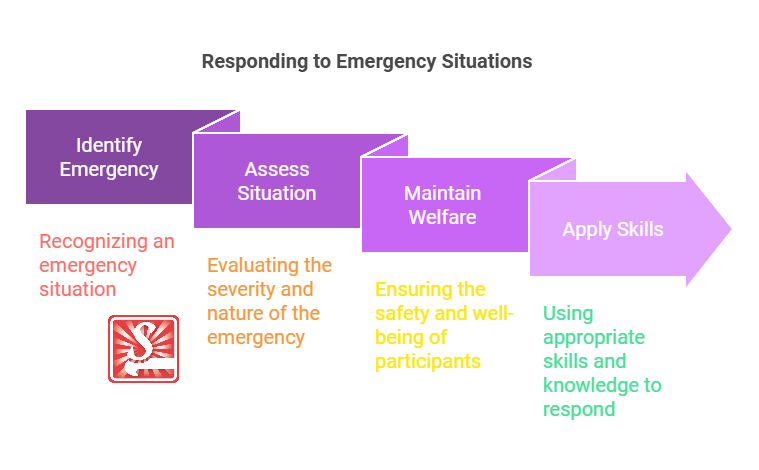
Effective group control strategies integrate seamlessly with other sport and recreation components such as event management and risk assessment by ensuring participant and public safety. The strategies provide a framework for real-time response during events, facilitating seamless coordination between staff and emergency services to manage potential risks efficiently.
Where can the student go to find out more information about effective group control strategies in emergency situations?
- Safe Work Australia – Emergency plans
- Australian Red Cross – Emergency services
- Sport Australia – Safety and risk management
What job roles would be knowledgeable about effective group control strategies in emergency situations?
Roles include:
- Emergency Response Team Leaders
- Safety Officers
- Recreation Centre Managers
- Event Coordinators
- Security Personnel
What are effective group control strategies in emergency situations like in relation to sports, family, or schools?

In sports, effective group control strategies resemble a well-coordinated team executing a play, where everyone knows their role and objectives. Within a family setting, they parallel having an emergency plan in place, with all family members aware of their responsibilities during a crisis. In schools, these strategies reflect structured emergency drills that prepare students and staff to respond swiftly and calmly to any unexpected situations.
(The first edition of this post was generated by AI to provide affordable education and insights to a learner-hungry world. The author will edit, endorse, and update it with additional rich learning content.)
- About the Author
- More info

Workskill training for all

 Post Tagged with