
WHS Strategies for Maintaining Workplace Safety
Posted by SkillMaker in Dec, 2024
What is a concise description of WHS strategies when assisting with maintaining workplace safety?

WHS strategies in maintaining workplace safety involve employing structured methods and practices to safeguard employees, minimize risks, and ensure compliance with safety legislation. These strategies encompass identifying hazards, conducting risk assessments, and implementing control measures to prevent workplace incidents and promote a safe work environment.
Why do people in enterprises need WHS strategies when assisting with maintaining workplace safety?
Enterprises require WHS strategies to prevent accidents, reduce employee injuries, and comply with legal obligations, thus avoiding legal penalties. Implementing these strategies promotes employee well-being, increases productivity, and enhances the organization’s reputation by demonstrating a commitment to a safe work environment.
“WHS strategies for workplace safety are essential for minimizing risks, ensuring compliance, and fostering a culture of safety and well-being in organizations.”
What are the key components or elements of WHS strategies when assisting with maintaining workplace safety?
Key components of WHS strategies include:
- Hazard Identification: Recognizing potential sources of harm.
- Risk Assessment: Evaluating the likelihood and impact of identified hazards.
- Control Measures: Implementing actions to eliminate or manage risks.
- Training and Awareness: Educating employees on safety protocols and responsibilities.
- Monitoring and Review: Continually assessing the effectiveness of control measures and improving as necessary.
What key terms, with descriptions, relate to WHS strategies when assisting with maintaining workplace safety?

Registered Trademark®
- Workplace Safety Policy: An organization’s commitment to maintaining safety standards and practices.
- Safety Management System (SMS): A comprehensive framework for managing safety-related processes and procedures.
- Personal Protective Equipment (PPE): Equipment worn by employees to minimize exposure to hazards.
- Incident Reporting: Documenting and analyzing workplace incidents to prevent future occurrences.
- Ergonomics: Designing workspaces to optimize safety and efficiency.
Who is typically engaged with operating or implementing WHS strategies when assisting with maintaining workplace safety?
WHS officers, safety managers, supervisors, and employees are commonly involved in implementing WHS strategies. These individuals collaborate to uphold safety standards, conduct risk assessments, and ensure compliance with regulatory requirements.
How do WHS strategies align or integrate with other components of Workplace Safety?
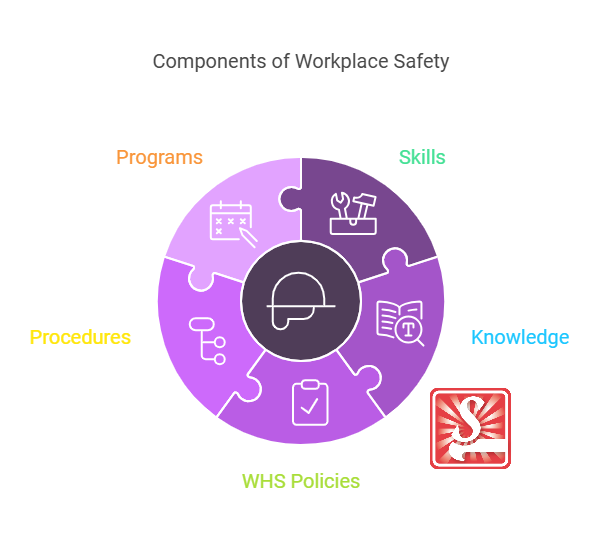
WHS strategies align with broader workplace safety initiatives by providing a structured approach to risk management and incident prevention. Effective WHS strategies complement safety training programs, emergency preparedness plans, and health monitoring systems to create a holistic safety framework within an organization.
Where can the student go to find out more information about WHS strategies when assisting with maintaining workplace safety?
What job roles would be knowledgeable about WHS strategies when assisting with maintaining workplace safety?
Roles include:
- WHS Officers
- Safety Managers
- Risk Assessors
- Human Resource Managers
- Occupational Health Specialists
What are WHS strategies like in relation to sports, family, or schools?

In sports, WHS strategies resemble a coach’s meticulous planning to minimize injury risks and ensure team safety during games and training. Within a family, it is akin to parents setting safety rules and ensuring a secure home environment for their children. In schools, it parallels developing policies and drills to maintain student safety and prepare for emergencies.
(The first edition of this post was generated by AI to provide affordable education and insights to a learner-hungry world. The author will edit, endorse, and update it with additional rich learning content.)
- About the Author
- More info

Workskill training for all

 Post Tagged with