
WHS Training Needs for Assisting with Maintaining Workplace Safety
Posted by SkillMaker in Dec, 2024
- Hazard Identification: The process of recognizing potential sources of harm.
- Safety Data Sheets (SDS): Documents that provide information on chemicals and their safe handling.
- Personal Protective Equipment (PPE): Gear designed to protect workers from specific hazards.
- Incident Reporting: Documenting accidents and near-misses to improve safety.
- Safe Work Procedures (SWP): Standardized methods to perform tasks safely.
- WHS Coordinators
- Safety Officers
- HR Managers
- Supervisors
- Line Managers
- Risk Assessment: Training on identifying and evaluating risks.
- Use of Safety Equipment: Instructions on proper handling and use of personal protective equipment (PPE).
- Emergency Procedures: Familiarization with emergency planning and response.
- Legal Responsibilities: Understanding compliance with WHS laws and regulations.
- Communication Skills: Training to effectively report safety concerns and incidents.
- Hazard Identification: The process of recognizing potential sources of harm.
- Safety Data Sheets (SDS): Documents that provide information on chemicals and their safe handling.
- Personal Protective Equipment (PPE): Gear designed to protect workers from specific hazards.
- Incident Reporting: Documenting accidents and near-misses to improve safety.
- Safe Work Procedures (SWP): Standardized methods to perform tasks safely.
- WHS Coordinators
- Safety Officers
- HR Managers
- Supervisors
- Line Managers
- About the Author
- More info
Who is typically engaged with operating or implementing WHS training in workplace safety?
WHS officers, safety consultants, human resources personnel, and line managers are typically engaged with conducting or supervising WHS training in workplace safety. These roles coordinate efforts to ensure the workforce adheres to established safety practices and periodically update training programs as needed.
How does WHS training align or integrate with other components of Workplace Safety?
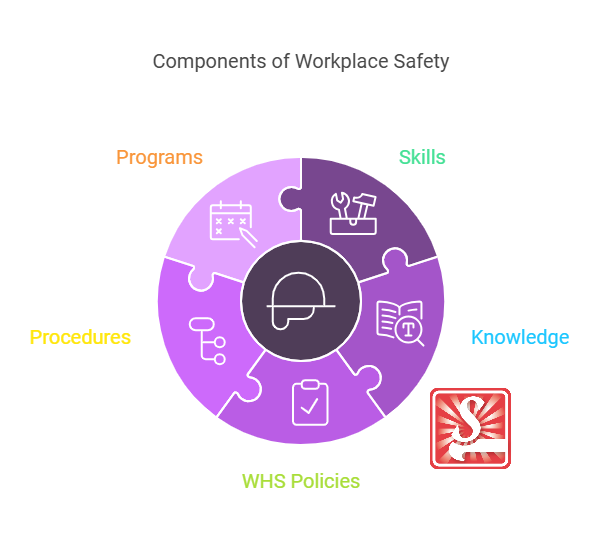
WHS training is an integral component of a comprehensive workplace safety strategy. It supports other safety measures by raising awareness, ensuring compliance, and fostering a culture of safety. By equipping employees with essential knowledge and skills, WHS training helps in implementing safety protocols, using equipment correctly, and promoting proactive risk management.
Where can the student go to find out more information about WHS training in workplace safety?
What job roles would be knowledgeable about WHS training in workplace safety?
Roles include:
What is WHS training in workplace safety like in relation to sports, family, or schools?

In relation to sports, WHS training is similar to a coach preparing athletes to avoid injuries through proper technique and safety protocols. In a family context, it resembles parents teaching children safety rules at home. In schools, it mirrors health education that equips students with knowledge to ensure their own safety and the well-being of others.
(The first edition of this post was generated by AI to provide affordable education and insights to a learner-hungry world. The author will edit, endorse, and update it with additional rich learning content.)
What is a concise description of WHS training needs in workplace safety maintenance?

WHS (Workplace Health and Safety) training needs for maintaining workplace safety involve assessing and providing necessary education and skills to employees to ensure a safe and hazard-free work environment. This training focuses on understanding potential risks, proper use of equipment, emergency procedures, and health regulations to prevent workplace accidents and injuries.
Why do people in enterprises need WHS training for maintaining workplace safety?
Enterprises need WHS training to equip their employees with knowledge on how to identify, assess, and control hazards to maintain a safe working environment. Proper training ensures compliance with legal safety regulations, reduces the risk of workplace incidents, and protects the company’s most valuable asset—its workforce. Additionally, it enhances overall productivity and can reduce financial costs associated with workplace accidents.
“WHS training is integral to fostering a culture of safety, ensuring employees are informed, prepared, and proactive in maintaining workplace safety standards.”
What are the key components or elements of WHS training in workplace safety?
Key components of WHS training include:
What key terms, with descriptions, relate to WHS training in workplace safety?

Registered Trademark®
Who is typically engaged with operating or implementing WHS training in workplace safety?
WHS officers, safety consultants, human resources personnel, and line managers are typically engaged with conducting or supervising WHS training in workplace safety. These roles coordinate efforts to ensure the workforce adheres to established safety practices and periodically update training programs as needed.
How does WHS training align or integrate with other components of Workplace Safety?
WHS training is an integral component of a comprehensive workplace safety strategy. It supports other safety measures by raising awareness, ensuring compliance, and fostering a culture of safety. By equipping employees with essential knowledge and skills, WHS training helps in implementing safety protocols, using equipment correctly, and promoting proactive risk management.
Where can the student go to find out more information about WHS training in workplace safety?
What job roles would be knowledgeable about WHS training in workplace safety?
Roles include:
What is WHS training in workplace safety like in relation to sports, family, or schools?
In relation to sports, WHS training is similar to a coach preparing athletes to avoid injuries through proper technique and safety protocols. In a family context, it resembles parents teaching children safety rules at home. In schools, it mirrors health education that equips students with knowledge to ensure their own safety and the well-being of others.
(The first edition of this post was generated by AI to provide affordable education and insights to a learner-hungry world. The author will edit, endorse, and update it with additional rich learning content.)

Workskill training for all

 Post Tagged with