
WHS Feedback When Assisting with Maintaining Workplace Safety
Posted by SkillMaker in Dec, 2024
What is a concise description of WHS feedback in assisting with maintaining workplace safety?

WHS (Work Health and Safety) feedback involves the process of providing and receiving critical information related to safety practices, incidents, and conditions in a workplace. It focuses on identifying risks, improving safety measures, and ensuring compliance with WHS legislation to maintain a safe working environment.
Why do people in enterprises need WHS feedback for maintaining workplace safety?
Enterprises need WHS feedback to facilitate a culture of safety and continuous improvement. Through effective feedback, potential hazards can be identified early, preventive measures can be implemented, and the workforce can be engaged in maintaining optimal safety standards. This minimizes the risk of workplace injuries and ensures that safety protocols are up to date, ultimately protecting both employees and the organization’s reputation.
“Engaging in WHS feedback nurtures a proactive environment where safety is a shared responsibility, leading to a resilient and secure workplace.”
What are the key components or elements of WHS feedback in workplace safety?
Key components of WHS feedback include:
- Open Communication Channels: Accessibility for all workers to voice safety concerns.
- Regular Safety Audits: Scheduled reviews of safety practices and infrastructure.
- Incident Reporting Systems: Mechanisms for documenting and analyzing safety incidents.
- Feedback Loop: Processes to ensure feedback is reviewed and addressed appropriately.
- Training and Awareness Programs: Continuous education to keep safety knowledge current.
What key terms, with descriptions, relate to WHS feedback in workplace safety?

Registered Trademark®
- Safety Culture: The collective attitude of workers towards safety practices and principles.
- Risk Assessment: Process of identifying and evaluating potential hazards.
- Safety Compliance: Adherence to WHS laws and regulations.
- Hazard Identification: Recognizing possible sources of harm in the workplace.
- Corrective Actions: Steps taken to rectify unsafe conditions or practices.
Who is typically engaged with operating or implementing WHS feedback in workplace safety?
Safety officers, HR managers, supervisors, and all employees are typically engaged in the process of providing and implementing WHS feedback. It’s crucial for everyone within an organization to participate actively to ensure a comprehensive approach to workplace safety.
How does WHS feedback align or integrate with other components of Workplace Safety?
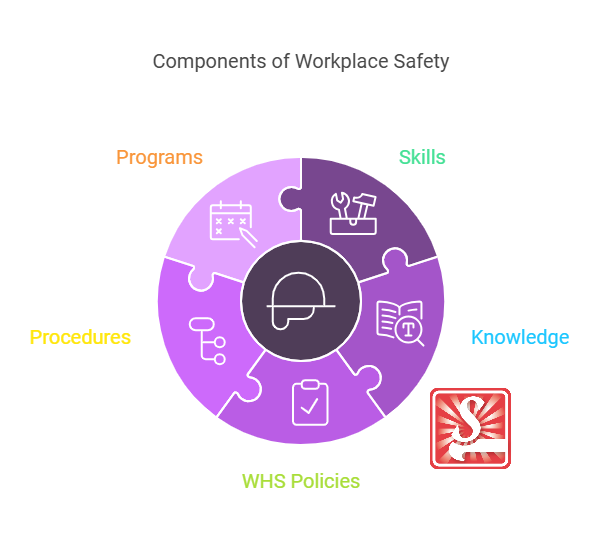
WHS feedback aligns with the overall framework of workplace safety by creating a continuous loop of risk identification, assessment, and improvement. It complements risk management strategies, ensures compliance with safety standards, and enhances the overall safety culture within the organization. Together, these components form a dynamic and proactive safety system.
Where can the student go to find out more information about WHS feedback in workplace safety?
What job roles would be knowledgeable about WHS feedback in workplace safety?
Roles include:
- Safety Officers
- HR Managers
- Compliance Managers
- Operations Supervisors
- Line Managers
What is WHS feedback like in relation to sports, family, or schools?

WHS feedback in workplace safety can be likened to the feedback system in sports where coaches and players communicate to improve performance and strategies. In a family, it resembles open discussions to maintain a harmonious and safe household environment. In schools, it parallels parent-teacher conferences where feedback is critical for student improvement and safety.
(The first edition of this post was generated by AI to provide affordable education and insights to a learner-hungry world. The author will edit, endorse, and update it with additional rich learning content.)
- About the Author
- More info

Workskill training for all

 Post Tagged with