
Hazard Identification Outcomes When Assisting with Maintaining Workplace Safety
Posted by SkillMaker in Dec, 2024
What is a concise description of hazard identification outcomes when assisting with maintaining workplace safety?

Hazard identification outcomes when assisting with maintaining workplace safety involve recognizing potential hazards within a work environment and accurately assessing the level of risk these hazards may pose. This process is critical to developing effective control measures to prevent workplace accidents and diseases, thereby enhancing the safety and wellbeing of employees.
Why do people in enterprises need hazard identification outcomes when assisting with maintaining workplace safety?
Enterprises need hazard identification outcomes to proactively manage risks within the workplace. By identifying hazards early and accurately, businesses can implement appropriate control measures to prevent incidents, reduce potential harm to employees, lower costs associated with workplace accidents, and ensure compliance with occupational health and safety regulations.
“Effective hazard identification is the cornerstone of a safe working environment, providing a foundation for risk management strategies and legal compliance.”
What are the key components or elements of hazard identification outcomes in maintaining workplace safety?
Key components of hazard identification outcomes include:
- Systematic Identification: An organized approach to detecting hazards.
- Risk Assessment: Evaluating the potential impacts of hazards.
- Control Measures: Implementing strategies to mitigate identified risks.
- Regular Monitoring: Ongoing surveillance to ensure identified hazards remain controlled.
- Documentation: Keeping accurate records of hazards and control measures.
What key terms, with descriptions, relate to hazard identification outcomes in workplace safety?

Registered Trademark®
- Hazard: A situation or condition that poses a level of threat to life, health, property, or environment.
- Risk: The probability of harm occurring from exposure to a hazard.
- Control Measure: An action or device implemented to mitigate or reduce risk.
- Risk Assessment: The process of evaluating the risks arising from a hazard, considering the severity and likelihood of outcomes.
- Safety Audit: An examination of a workplace to evaluate the effectiveness of safety practices and procedures.
Who is typically engaged with operating or implementing hazard identification outcomes?
Work Health and Safety (WHS) officers, safety managers, supervisors, and employees are typically involved in operating or implementing hazard identification outcomes. These roles cooperate to ensure connected awareness and action towards maintaining a safe workplace.
How does hazard identification outcomes align or integrate with other components of Workplace Safety?
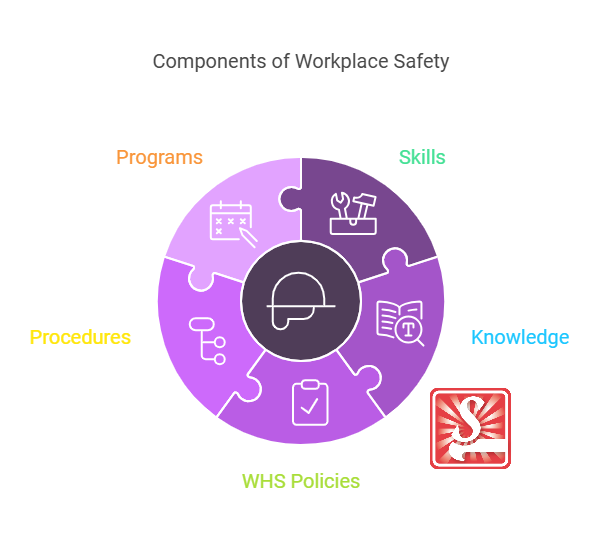
Hazard identification outcomes serve as a key element in workplace safety. They align with risk management processes, incident reporting, and emergency response planning. By providing the groundwork for understanding potential issues, these outcomes ensure other safety components are effectively aligned with overall safety strategies.
Where can the student go to find out more information about hazard identification outcomes?
What job roles would be knowledgeable about hazard identification outcomes in workplace safety?
Roles include:
- Work Health and Safety Officers
- Safety Managers
- Supervisors
- Site Inspectors
- Occupational Health Specialists
What are hazard identification outcomes like in relation to sports, family, or schools?

In sports, hazard identification outcomes are similar to safety assessments of equipment and practice sessions designed to avoid injuries.
In a family setting, it resembles checking and child-proofing areas to protect children.
For schools, it’s similar to conducting safety drills and inspections to safeguard students and staff from potential threats within the school environment.
(The first edition of this post was generated by AI to provide affordable education and insights to a learner-hungry world. The author will edit, endorse, and update it with additional rich learning content.)
- About the Author
- More info

Workskill training for all

 Post Tagged with