
Understanding WHS Laws for Assisting with Workplace Safety
Posted by SkillMaker in Dec, 2024
What is a concise description of WHS laws applicable to maintaining workplace safety?

Workplace Health and Safety (WHS) laws are regulations designed to keep Australian workplaces safe by setting out duties and standards for employers and employees alike. These laws ensure that the working environment is free from hazards that could harm workers’ health and safety.
Why do people in enterprises need to understand WHS laws when maintaining workplace safety?
Understanding WHS laws is essential for ensuring compliance, minimizing risks, and fostering a culture of safety in the workplace. Employers and workers who are aware of these laws can better identify hazards, implement necessary controls, and improve overall workplace safety. Compliance with WHS laws also helps to avoid legal liabilities and penalties associated with unsafe work practices.
“Knowing WHS laws is vital for creating secure workplaces, inspiring trust, and ensuring the well-being of all employees.”
What are the key components or elements of WHS laws relevant to workplace safety?
Key components of WHS laws include:
- Duty of Care: Employers’ and employees’ legal obligations to take reasonable steps to ensure workplace safety.
- Risk Assessment: Identifying potential hazards and assessing the risks associated with them.
- Control Measures: Implementing strategies to reduce or eliminate risks.
- Incident Reporting: Reporting workplace incidents and hazards to the relevant authorities.
- Training and Supervision: Providing proper training and supervision to ensure employees are competent in their roles.
What key terms, with descriptions, relate to WHS laws in workplace safety?

Registered Trademark®
- Safe Work Australia: The national policy body responsible for WHS law development and implementation.
- Harmonisation: The process of creating uniform WHS laws across all Australian jurisdictions.
- PCBU (Person Conducting a Business or Undertaking): An individual or entity responsible for worker safety.
- Hazard: A situation or thing that has the potential to cause harm.
- Consultation: The process of exchanging information and opinions on WHS issues with employees.
Who is typically engaged with operating or implementing WHS laws within a workplace?
Management, safety officers, and WHS committees are primarily involved in operating and implementing WHS laws. They work together to develop safety practices, conduct risk assessments, and implement control measures to maintain a safe workplace. In addition, all employees are encouraged to participate in safety training and engage with WHS policies to contribute to a culture of safety.
How do WHS laws integrate with other components of Workplace Safety?
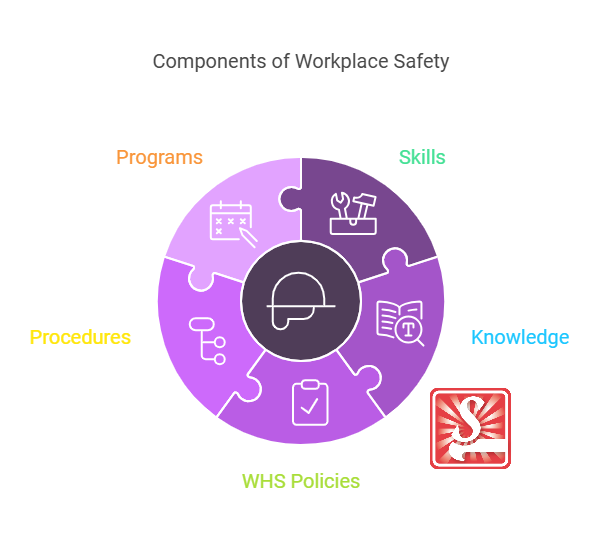
WHS laws serve as the backbone of workplace safety by establishing the legal framework that supports all safety-related activities. They guide policy development, employee training programs, and emergency response procedures. Compliance with WHS laws aligns with organisational safety goals and enhances operational efficiency by reducing workplace injuries and associated costs.
Where can the student go to find out more information about WHS laws for workplace safety?
What job roles would be knowledgeable about WHS laws for workplace safety?
Roles include:
- Health and Safety Officers
- Risk Assessors
- Compliance Managers
- WHS Advisors
- HR Managers
What are WHS laws like in relation to sports, family, or schools?

Similar to the rules in sports that ensure fair play and safety, WHS laws set boundaries and guidelines to protect workers within a workplace.
In a family context, they could be likened to house rules that keep every member safe and promote harmony.
In schools, WHS laws resemble educational policies that enforce discipline and create a conducive learning environment, ensuring the safety and well-being of all students and staff.
(The first edition of this post was generated by AI to provide affordable education and insights to a learner-hungry world. The author will edit, endorse, and update it with additional rich learning content.)
- About the Author
- More info

Workskill training for all

 Post Tagged with