
WHS Procedures When Assisting with Maintaining Workplace Safety
Posted by SkillMaker in Dec, 2024
What is a concise description of WHS procedures when assisting with maintaining workplace safety?

WHS (Work Health and Safety) procedures when assisting with maintaining workplace safety involve implementing and adhering to established practices and guidelines designed to protect the health, safety, and welfare of individuals in the workplace. This involves hazard identification, risk assessment, and the application of control measures to prevent accidents and injuries.
Why do people in enterprises need WHS procedures to assist with maintaining workplace safety?
Enterprises need WHS procedures to minimize the risk of workplace incidents and ensure a safe working environment. Implementing robust safety measures protects employees, reduces potential liabilities, enhances productivity, and fosters a culture of safety-consciousness. This leads to improved morale, lower absenteeism rates, and compliance with legal obligations.
“Implementing thorough WHS procedures is essential for creating a secure and healthy workplace, reducing risk, and ensuring a proactive safety culture.”
What are the key components or elements of WHS procedures when assisting with maintaining workplace safety?
Key components of WHS procedures include:
- Hazard Identification: Systematic recognition of potential sources of harm.
- Risk Assessment: Evaluating the likelihood and severity of hazards.
- Control Measures: Implementing strategies to mitigate identified risks.
- Training and Education: Equipping staff with the knowledge and skills to maintain safety.
- Monitoring and Review: Continuous evaluation of safety strategies effectiveness.
What key terms, with descriptions, relate to WHS procedures when assisting with maintaining workplace safety?

Registered Trademark®
- Risk Management: The process of identifying, assessing, and controlling risks.
- Personal Protective Equipment (PPE): Safety gear used to protect workers from hazards.
- Safety Audit: A systematic review to ensure compliance with safety regulations.
- Incident Reporting: Reporting process for workplace accidents or near-misses.
- Emergency Procedures: Plans for responding to unforeseen events effectively.
Who is typically engaged with operating or implementing WHS procedures to assist with maintaining workplace safety?
Safety officers, HR personnel, line managers, team leaders, and all employees are typically responsible for operating or implementing WHS procedures. Each plays a role in ensuring safety standards and protocols are adhered to, creating a collaborative approach to maintaining workplace safety.
How do WHS procedures align or integrate with other components of Workplace Safety?
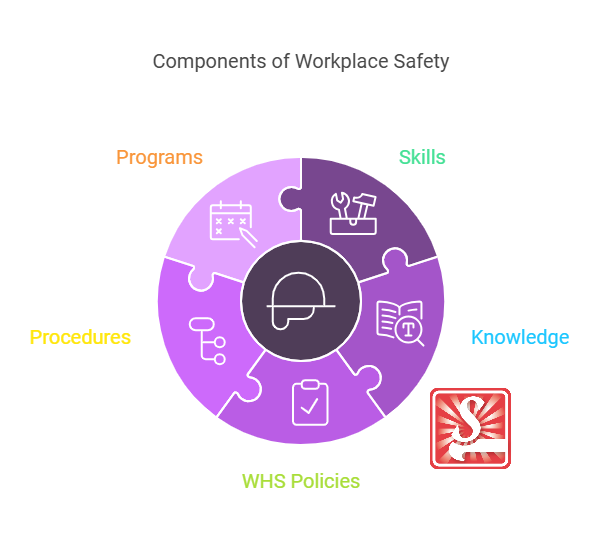
WHS procedures form the foundation of workplace safety, dovetailing with components like risk assessments, training, and emergency management. They ensure coherent integration by establishing a consistent approach to identifying hazards and controlling risks across all safety-related activities.
Where can the student go to find out more information about WHS procedures in maintaining workplace safety?
What job roles would be knowledgeable about WHS procedures when assisting with maintaining workplace safety?
Roles include:
- Safety Officers
- Health and Safety Managers
- HR Advisors
- Operations Managers
- Line Supervisors
What are WHS procedures like in relation to sports, family, or schools?

In sports, WHS procedures are comparable to the rules and regulations designed to protect players and ensure fair play. In family settings, they are akin to the guidelines parents use to keep children safe. In schools, they mirror policies that ensure the safety and wellbeing of students and staff, ensuring everyone adheres to structured, protective measures.
(The first edition of this post was generated by AI to provide affordable education and insights to a learner-hungry world. The author will edit, endorse, and update it with additional rich learning content.)
- About the Author
- More info

Workskill training for all

 Post Tagged with