
Collusive Bidding: Understanding the Risks in Auction Sales
Posted by SkillMaker in Feb, 2026
What is a concise description of collusive bidding practices when conducting and completing a sale by auction?

Collusive bidding refers to an illegal practice in auctions where two or more parties conspire to manipulate the auction result, often to suppress the final bid amount, thereby defrauding the seller. This undermines the transparency and fairness of auctions, impacting the property’s true market value.
Listen to this article as a podcast
Why do people in the Real Estate industry need to understand collusive bidding practices when conducting and completing a sale by auction?
Understanding collusive bidding is crucial for maintaining the integrity and fairness of the auction process. It ensures that all participants, including buyers and sellers, are dealt with equitably and can trust the auction system to reflect true market conditions. This knowledge aids real estate professionals in avoiding legal complications and maintaining their reputation.
“Vigilance against collusive bidding preserves the integrity of auctions, ensuring market value is determined by genuine competition.”
What are the key components or elements of collusive bidding practices when conducting and completing a sale by auction?
Key elements of collusive bidding include:
- Bid Shielding: Placing bids with the intent to withdraw them to lower the final bid price.
- Bid Suppression: Agreements between bidders to abstain from bidding or bid lower amounts.
- Bid Rotation: Agreements to take turns being the winning bidder.
- Phantom Bidding: Creating fake bids to stimulate higher offers.
What key terms, with descriptions, relate to collusive bidding practices when conducting and completing a sale by auction?

Registered Trademark®
- Conspiracy: Agreements between parties to act in concert for an unlawful purpose.
- Cartel Conduct: Participation in anti-competitive arrangements that distort market outcomes.
- Market Manipulation: Activities that interfere with the proper functioning of the auction market.
Who is typically engaged with operating or implementing collusive bidding practices when conducting and completing a sale by auction?
Typically, unethical bidders and sometimes unscrupulous auctioneers might engage in or facilitate collusive bidding practices. These individuals work to manipulate auction results to their advantage, often against the interests of a fair market and seller.
How does collusive bidding practices when conducting and completing a sale by auction align or integrate with other components of Real Estate industry in Australia?
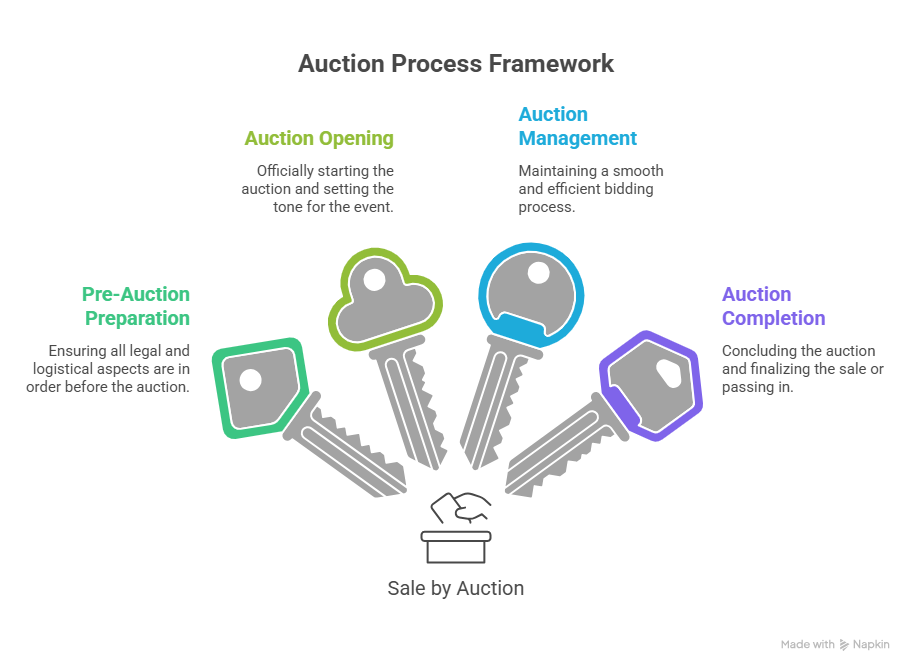
Addressing collusive bidding practices is an essential part of ensuring compliance with Australian Competition and Consumer Commission (ACCC) regulations. By aligning auctions with these standards, a fair competitive environment is maintained, supporting overall market integrity and consumer protection within the real estate sector.
Where can the student go to find out more information about collusive bidding practices when conducting and completing a sale by auction?
- General rules for conducting an auction of goods
- The law and authority of auctioning real property
- Skillmaker
What job roles would be knowledgeable about collusive bidding practices when conducting and completing a sale by auction?
Roles include:
- Auctioneers
- Real Estate Agents
- Regulatory Compliance Officers
- Consumer Protection Advocates
- Real Estate Lawyers
What is collusive bidding practices when conducting and completing a sale by auction like in relation to sports, family, or schools?

In sports, collusive bidding is akin to athletes intentionally losing or manipulating outcomes to fix the game, undermining fair competition. In a family setting, it could be compared to family members colluding to influence decisions unfairly. In educational settings, it resembles students collaborating to cheat on exams, compromising academic integrity.
(The first edition of this post was generated by AI to provide affordable education and insights to a learner-hungry world. The author will edit, endorse, and update it with additional rich learning content.)
(Skillmaker – 2025)- About the Author
- More info

Workskill training for all
