
Auction Neutrality in Conducting and Completing a Sale by Auction
Posted by SkillMaker in Feb, 2026
What is a concise description of auction neutrality when conducting and completing a sale by auction?

Auction neutrality refers to maintaining impartiality and fairness throughout the auction process. It ensures that all parties—sellers, bidders, and observers—are treated fairly, fostering trust and transparency. Neutrality is pivotal in encouraging open bidding, avoiding biases, and ensuring compliance with legal and ethical standards.
Listen to this article as a podcast
Why do people in the Real Estate industry need auction neutrality when conducting and completing a sale by auction?
In the real estate industry, auction neutrality is critical to maintaining the credibility and legitimacy of the auction process. It reassures bidders and sellers of fair treatment, encouraging active participation and competitive bidding. This trust leads to better auction outcomes, helping sellers achieve optimal prices and buyers make confident investments.
“Auction neutrality in real estate ensures a level playing field, fostering trust, fair competition, and successful transactions.”
What are the key components or elements of auction neutrality when conducting and completing a sale by auction?
Key components of auction neutrality include:
- Transparent Procedures: Clearly defined and publicly disclosed auction processes.
- Impartial Auctioneer: A professional auctioneer with no vested interest in the outcomes.
- Legal Compliance: Adherence to regulatory requirements and industry standards.
- Equal Opportunities: Fair access and equal chances for all participants to bid.
- Disclosure of Information: Full and accurate disclosure of property details and auction terms.
What key terms, with descriptions, relate to auction neutrality when conducting and completing a sale by auction?

Registered Trademark®
- Bidder Registration: The process of identifying and recording individuals eligible to participate in the auction.
- Reserve Price: The minimum price a seller is willing to accept for the property, known only to the seller and auctioneer.
- Code of Conduct: Ethical standards and practices governing auctioneers and participants.
- Conflict of Interest: Situations where personal interests might compromise neutrality.
- Equitable Participation: Ensuring all bidders have a fair chance to compete.
Who is typically engaged with operating or implementing auction neutrality when conducting and completing a sale by auction?
Professional auctioneers, real estate agents, regulatory bodies, and industry associations typically ensure auction neutrality. These entities implement and oversee compliance with practices that promote fair and transparent auctions.
How does auction neutrality when conducting and completing a sale by auction align or integrate with other components of the Real Estate industry in Australia?
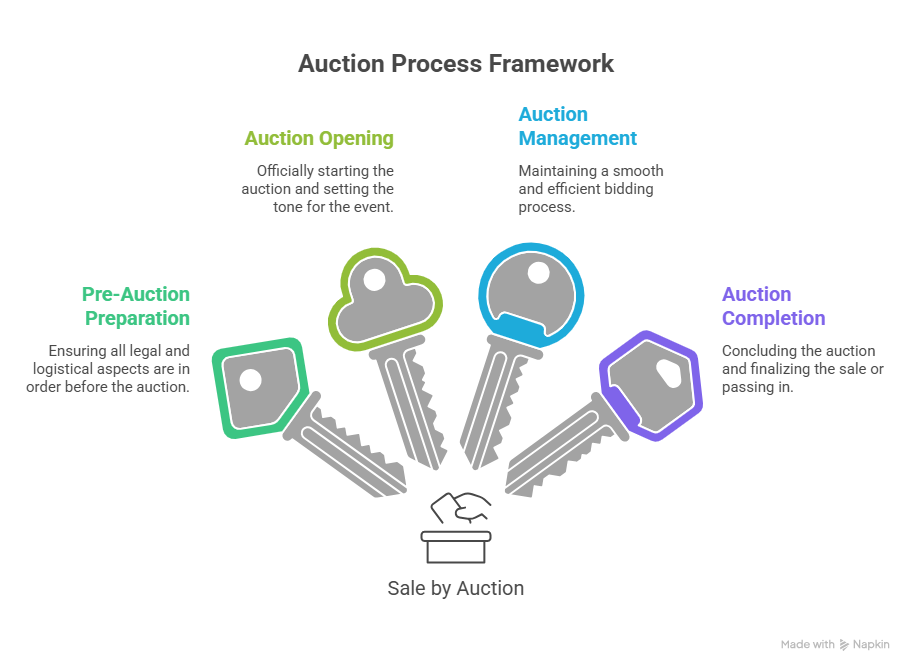
Auction neutrality aligns with the real estate industry by fostering trust and reliability, critical for successful property transactions. It complements legal compliance, ethical standards, and marketing strategies, ensuring the industry’s reputation for fairness and integrity is upheld, which is crucial for sustained growth and consumer confidence.
Where can the student go to find out more information about auction neutrality when conducting and completing a sale by auction?
- General rules for conducting an auction of goods
- The law and authority of auctioning real property
- Skillmaker
What job roles would be knowledgeable about auction neutrality when conducting and completing a sale by auction?
Roles include:
- Auctioneers
- Real Estate Agents
- Compliance Officers
- Regulatory Officials
- Industry Consultants
What is auction neutrality when conducting and completing a sale by auction like in relation to sports, family, or schools?

In sports, auction neutrality is akin to a referee’s role in ensuring fair play and impartial judgement. In families, it is similar to a parent mediating disputes without favouritism. In schools, it mirrors an educator ensuring equal opportunities for all students to contribute and succeed, maintaining a harmonious and just environment.
(The first edition of this post was generated by AI to provide affordable education and insights to a learner-hungry world. The author will edit, endorse, and update it with additional rich learning content.)
(Skillmaker – 2025)- About the Author
- More info

Workskill training for all
