
Access Requirements for Auction Conduct and Completion
Posted by SkillMaker in Feb, 2026
What is a concise description of access requirements for conducting and completing a sale by auction?

Access requirements for conducting and completing a sale by auction involve ensuring the auction area is properly set up, accessible, and compliant with regulations. This includes arranging adequate space, proper entry and exit points, and ensuring the auction is visible and audible to all participants. It also entails adhering to safety standards and local legal requirements to ensure a smooth and orderly auction process.
Listen to this article as a podcast
Why do people in the Real Estate industry need access requirements for conducting and completing a sale by auction?
Access requirements are crucial for those in the Real Estate industry to facilitate transparent and efficient auction processes. Ensuring an auction is run smoothly and efficiently boosts participants’ trust and confidence. It protects all parties involved by complying with legal standards and ensures the auctioneer is positioned effectively to engage with bidders and conduct the auction with clarity.
“Well-organized access arrangements ensure auctions are conducted smoothly, safely, and in compliance with regulations, promoting transparency and trust among participants.”
What are the key components or elements of access requirements for auction conduct?
Key components include:
- Spacing: Sufficient space for participants to move comfortably without congestion.
- Visibility: Clear view of the auctioneer and items being auctioned for all participants.
- Entry and Exit Points: Clearly marked and easily accessible for emergencies and general flow.
- Sound System: Ensures the auctioneer can be heard clearly by all attendees.
- Compliance: Adherence to local laws and safety standards.
What key terms, with descriptions, relate to access requirements for auction conduct?

Registered Trademark®
- Auctioneer: The person responsible for conducting and managing the auction.
- Bidder: An individual or entity that places bids during an auction.
- Reserved Price: The minimum acceptable bid for the item being auctioned.
- Gavel: The auctioneer’s tool to signal the acceptance of a final bid legally binding the sale.
- Clearance Rate: The percentage of auctioned items that result in a sale.
Who is typically engaged with operating or implementing access requirements for auctions?
The auctioneer and the auction house staff are typically responsible for operating or implementing access requirements. They ensure that the venue is set up correctly and complies with all legal and safety standards. Event coordinators and Real Estate agents may also contribute to ensuring smooth entry, exit, and overall flow of the auction process.
How do access requirements align with other components of the Real Estate industry in Australia?
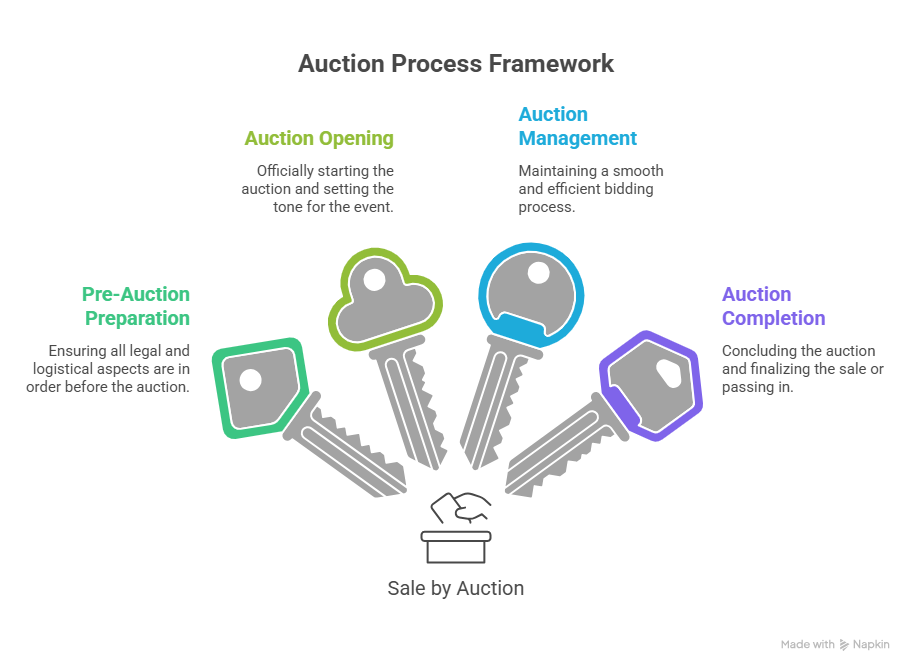
Access requirements align with other components of the Real Estate industry by ensuring transactions are conducted efficiently and transparently. These requirements also help to uphold legal and ethical standards, crucial in maintaining industry credibility. Clear and organised access arrangements foster an environment where buyer-seller interactions are facilitated smoothly, promoting successful sale outcomes.
Where can the student go to find out more information about access requirements for auction conduct?
- General rules for conducting an auction of goods
- The law and authority of auctioning real property
- Skillmaker
What job roles would be knowledgeable about access requirements for auction conduct?
Roles include:
- Auctioneers
- Real Estate Agents
- Event Coordinators
- Compliance Officers
- Security Personnel
How do access requirements compare to sports, family, or schools?

In sports, access requirements are akin to preparing a field with proper safety measures and ensuring teams have clear communication and routes for movement. A family analogy would involve organized home entry and exit strategies for different routines or events. In schools, this resembles planning fire drills with clear access routes and ensuring classrooms allow for smooth student and teacher interaction in an organized space.
(The first edition of this post was generated by AI to provide affordable education and insights to a learner-hungry world. The author will edit, endorse, and update it with additional rich learning content.)
(Skillmaker – 2025)- About the Author
- More info

Workskill training for all
