
Understanding the Specific Needs in Providing Individualised Support
Posted by SkillMaker in Jan, 2025
What is a concise description of understanding the specific needs when providing individualised support?

Understanding the specific needs in providing individualised support involves recognising and accommodating the unique preferences, situations, and goals of each individual. This approach fosters personal empowerment and enhances wellbeing by tailoring assistance to align with the client’s distinct characteristics and requirements.
Why do people in enterprises need to understand specific needs when providing individualised support?
Enterprises need to understand specific needs when providing individualised support to ensure that services are relevant and effective. Recognising individual differences leads to better client engagement, satisfaction, and outcomes. It also fosters trust and reputation, making service delivery more compassionate and responsive to the diverse needs of the community.
“Understanding specific needs allows for a more personalized, meaningful and impactful service delivery, aligning closely with individual aspirations and circumstances.”
What are the key components or elements of understanding specific needs in providing individualised support?
Key components of understanding specific needs include:
- Active Listening: Engaging with individuals to truly understand their needs and concerns.
- Personalisation: Tailoring support strategies to accommodate an individual’s distinct requirements.
- Collaboration: Partnering with clients, family, and other professionals to develop comprehensive support plans.
- Empathy: Demonstrating understanding and compassion towards individuals’ experiences and emotions.
- Flexibility: Adapting to evolving needs and refining support strategies accordingly.
What key terms, with descriptions, relate to understanding specific needs in providing individualised support?

Registered Trademark®
- Individualised Plans: Strategies designed specifically to address the unique needs of individuals.
- Case Management: A collaborative process that assesses, plans, implements, and evaluates care tailored to client needs.
- Client-Centred Care: A model of care that respects and responds to individual preferences, needs, and values.
- Holistic Approach: Considering all aspects of an individual’s life to provide comprehensive support.
- Needs Assessment: Systematically determining and addressing gaps in an individual’s care needs.
Who is typically engaged with operating or implementing understanding of specific needs in providing individualised support?
Roles such as support workers, case managers, healthcare professionals, social workers, and allied health practitioners are engaged in understanding and implementing individualised support. These professionals work collaboratively to ensure that support aligns with clients’ personal needs and goals.
How does understanding specific needs in providing individualised support align or integrate with other components of Health or Community Services in Australia?
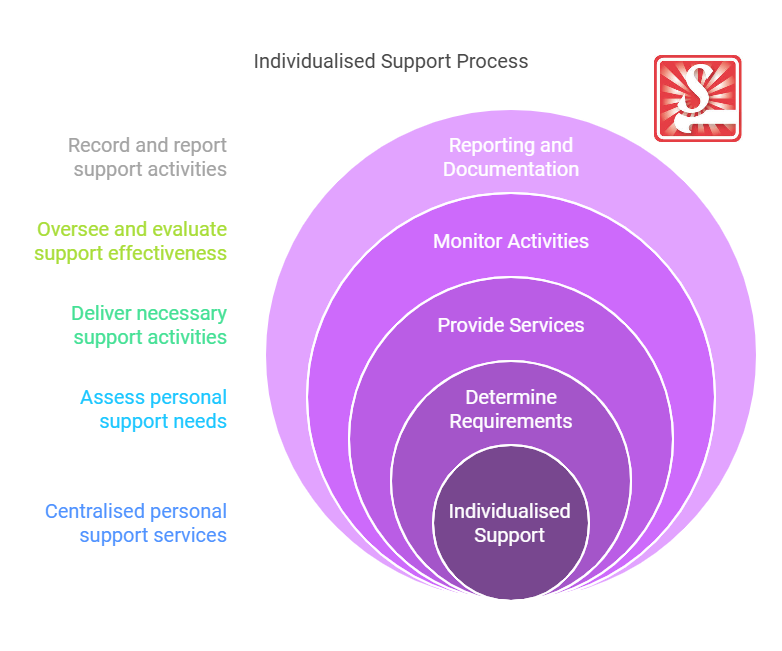
Understanding specific needs in individualised support aligns with broader healthcare strategies by promoting personalised care approaches. It integrates well with case management, mental health services, aged care, disability support, and palliative care. These sectors rely on accurately identifying specific needs to deliver tailored, effective, and client-focused outcomes.
Where can the student go to find out more information about understanding specific needs in providing individualised support?
- Australian Bureau of Statistics: Community Services and Health
- Australian Government Department of Health and Aged Care
- National Disability Insurance Scheme (NDIS)
- Skillmaker
What job roles would be knowledgeable about understanding specific needs in providing individualised support?
Roles include:
- Support Workers
- Case Managers
- Healthcare Professionals
- Social Workers
- Allied Health Practitioners
What is understanding specific needs in providing individualised support like in relation to sports, family, or schools?

In sports, understanding specific needs translates to customised training regimens for athletes to address their strengths and areas for improvement.
In a family setting, it involves recognising the diverse needs and preferences of family members to maintain harmony and foster supportive relationships.
In schools, it refers to tailored educational plans that accommodate the learning styles and requirements of each student to optimise their academic potential.
(The first edition of this post was generated by AI to provide affordable education and insights to a learner-hungry world. The author will edit, endorse, and update it with additional rich learning content.)
- About the Author
- More info

Workskill training for all

 Post Tagged with