
Understanding Sensory Needs in Individualised Support
Posted by SkillMaker in Jan, 2025
What is a concise description of sensory needs in individualised support?

Understanding sensory needs in individualised support involves recognising and responding to the unique sensory preferences and challenges experienced by individuals. This can include sensitivity to noise, light, touch, and other sensory inputs, and ensuring support strategies address these preferences to enhance comfort and autonomy in daily activities.
Why do people in enterprises need to understand sensory needs in providing individualised support?
Enterprises involved in healthcare and community services need to understand sensory needs to deliver services that are not only effective but respectful and empathetic. Addressing sensory needs can significantly enhance an individual’s overall well-being, reduce stress and anxiety, and promote a more inclusive environment conducive to positive health outcomes.
“Understanding and addressing sensory needs in individualised support fosters inclusive environments and enhances comfort, aiding in effective care provision.”
What are the key components or elements of understanding sensory needs in individualised support?
Key components of understanding sensory needs in individualised support include:
- Assessment: Identifying specific sensory preferences and sensitivities.
- Personalisation: Tailoring support strategies to meet individual sensory needs.
- Communication: Maintaining open dialogues about sensory preferences and challenges.
- Adaptation: Modifying environments and routines to accommodate sensory needs.
- Monitoring and Review: Continually assessing and adjusting support strategies.
What key terms, with descriptions, relate to understanding sensory needs in individualised support?

Registered Trademark®
- Sensory Processing: How the brain interprets and responds to sensory input from the environment.
- Sensory Modulation: The ability to regulate and adjust to sensory stimuli.
- Sensory Overload: When sensory input becomes overwhelming and difficult to process.
- Sensory Preferences: Individual preferences for certain types or levels of sensory input.
- Sensory Diet: A tailored plan of sensory activities to help individuals self-regulate and maintain focus.
Who is typically engaged with operating or implementing support in regards to sensory needs?
Occupational therapists, support workers, caregivers, and healthcare professionals are typically responsible for implementing support with respect to sensory needs. They work collaboratively with individuals and their families to create environments and routines that accommodate unique sensory preferences and challenges.
How do sensory needs integrate with other components of Health or Community Services in Australia?
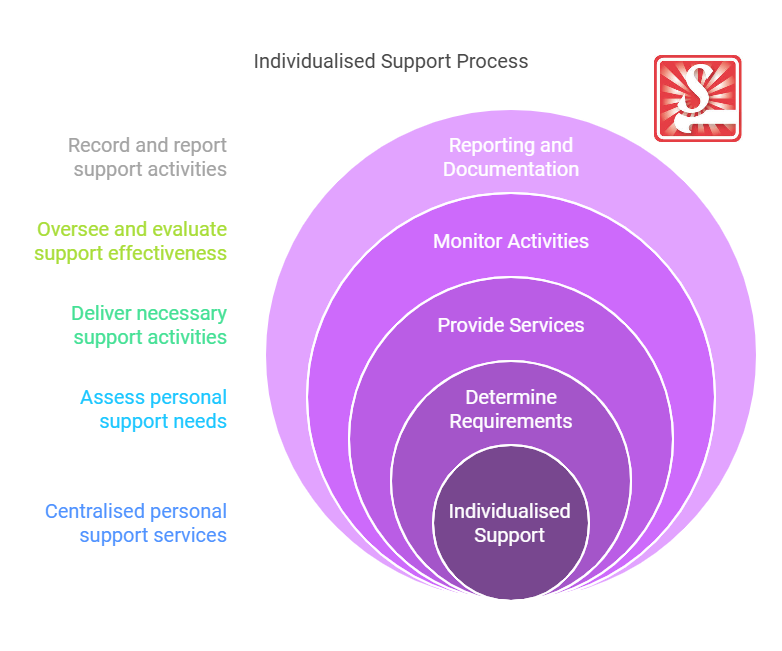
Sensory needs integrate with health and community service practices by offering frameworks for personalised care that promotes mental and physical well-being. Adjustments to accommodate sensory requirements are partnered with other care strategies to provide holistic and comprehensive support systems, thereby enhancing the quality of care and client satisfaction in service delivery.
Where can the student go to find out more information about sensory needs in individualised support?
What job roles would be knowledgeable about sensory needs in individualised support?
Roles include:
- Occupational Therapists
- Support Workers
- Disability Support Coordinators
- Healthcare Providers
- Cognitive Behavioural Therapists
What are sensory needs like in relation to sports, family, or schools?

In sports, understanding sensory needs is equivalent to tailoring training routines. Athletes often need specific environments (e.g., noise levels, lighting) to perform optimally.
For families, it involves creating a harmonious home environment that recognises and supports individual sensory preferences.
In schools, it mirrors the focus on creating accessible learning environments that accommodate diverse sensory needs to assure effective educational engagement and maximise academic success.
(The first edition of this post was generated by AI to provide affordable education and insights to a learner-hungry world. The author will edit, endorse, and update it with additional rich learning content.)
- About the Author
- More info

Workskill training for all

 Post Tagged with