
Building a Comfortable Environment for Individualised Support
Posted by SkillMaker in Jan, 2025
What is a concise description of a comfortable environment when providing individualised support?

A comfortable environment when providing individualised support refers to creating a setting where individuals feel secure, respected, and valued. This entails understanding and accommodating the unique needs, preferences, and cultural backgrounds of each person, thus enabling them to engage freely and respond positively to support.
Why do people in enterprises need a comfortable environment for providing individualised support?
Enterprises need to establish a comfortable environment for individualised support to enhance the effectiveness of services, improve client satisfaction, and foster positive outcomes. A supportive environment builds trust and rapport, encouraging open communication and fostering a sense of collaboration between support providers and recipients.
“A comfortable environment is the foundation of effective individualised support, promoting trust, engagement, and personal empowerment.”
What are the key components or elements of a comfortable environment for providing individualised support?
Key components of a comfortable environment include:
- Respectful Communication: Listening actively and recognising the individual’s perspective.
- Privacy and Confidentiality: Ensuring personal information is kept secure.
- Physical Comfort: Creating a safe and welcoming space.
- Emotional Support: Providing empathy and encouragement.
- Cultural Sensitivity: Appreciating and accommodating diverse backgrounds.
What key terms, with descriptions, relate to creating a comfortable environment for individualised support?

Registered Trademark®
- Empathy: Understanding another’s experiences and emotions to provide appropriate support.
- Cultural Competence: The ability to interact effectively with people across different cultures.
- Dignity: Acknowledging the worth and rights of every individual.
- Active Listening: Fully concentrating, understanding, responding, and remembering what is being said.
Who is typically engaged with operating or implementing a comfortable environment for individualised support?
Support workers, care coordinators, case managers, and healthcare providers are typically engaged in creating a comfortable environment for individualised support. They play a crucial role in establishing positive interactions and implementing personalised care strategies.
How does creating a comfortable environment for individualised support align or integrate with other components of Health or Community Services in Australia?
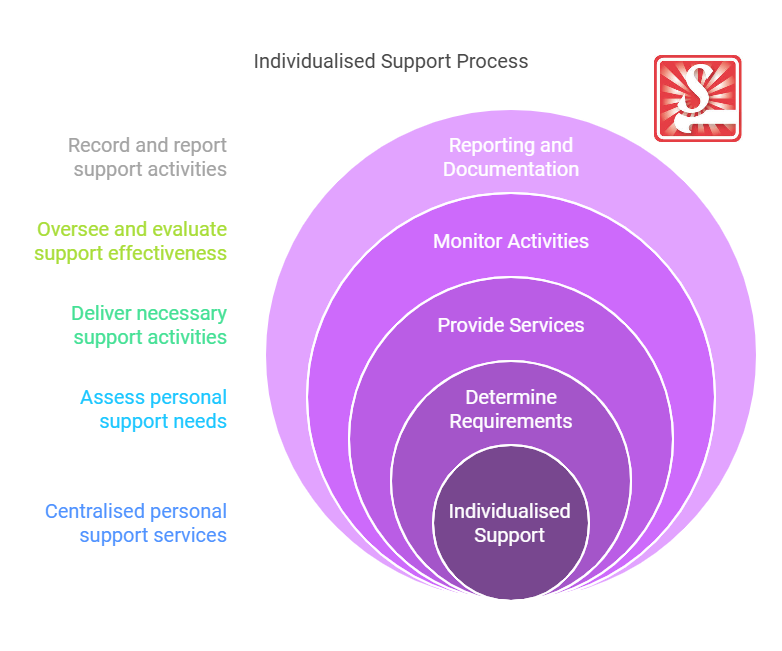
Creating a comfortable environment aligns with person-centred care approaches by emphasising the individual’s preferences as the focus of service delivery. It integrates seamlessly with holistic health strategies, supports mental well-being, and enhances communication within Community Services to ensure comprehensive and sensitive care.
Where can the student go to find out more information about creating a comfortable environment for individualised support?
- Australian Government Department of Health
- National Disability Insurance Scheme (NDIS)
- Aged Care Guide
- Skillmaker
What job roles would be knowledgeable about creating a comfortable environment for individualised support?
Roles that would be well-versed include:
- Support Workers
- Case Managers
- Care Coordinators
- Healthcare Providers
- Social Workers
What is creating a comfortable environment for individualised support like in relation to sports, family, or schools?

In sports, creating a comfortable environment mirrors the supportive atmosphere of a team where each member’s strengths are recognised and leveraged. Within families, it reflects nurturing relationships that provide safety and understanding. In schools, it aligns with fostering inclusive classrooms where students are encouraged to express themselves and pursue academic success in a positive setting.
(The first edition of this post was generated by AI to provide affordable education and insights to a learner-hungry world. The author will edit, endorse, and update it with additional rich learning content.)
- About the Author
- More info

Workskill training for all

 Post Tagged with