
WHS Opportunities When Assisting with Maintaining Workplace Safety
Posted by SkillMaker in Dec, 2024
What is a concise description of assisting with maintaining workplace safety?

Assisting with maintaining workplace safety involves supporting the implementation and adherence to occupational health and safety policies to prevent workplace accidents and illnesses. It encompasses hazard identification, risk assessments, safety audits, and promoting a culture of safety among all employees to ensure a safe working environment.
Why do people in enterprises need to assist with maintaining workplace safety?
Maintaining workplace safety is crucial for safeguarding workers, reducing workplace accidents, and ensuring legal compliance with safety regulations. By assisting in these efforts, employees contribute to minimizing risks and enhancing overall productivity and morale, which also leads to cost savings related to incidents and potential legal liabilities.
“Assisting in maintaining workplace safety creates a secure and efficient environment, promoting well-being among employees and fostering a proactive safety culture.”
What are the key components or elements of assisting with maintaining workplace safety?
Key components include:
- Hazard Identification: Recognizing potential sources of harm in the workplace.
- Risk Assessment: Evaluating the likelihood and impact of hazards to determine priority.
- Training and Education: Ensuring employees understand safety procedures and responsibilities.
- Emergency Preparedness: Developing plans to respond effectively to emergencies.
- Safety Audits: Conducting regular reviews to identify areas for improvement.
What key terms, with descriptions, relate to assisting with maintaining workplace safety?

Registered Trademark®
- OHS (Occupational Health and Safety): Practices and regulations for ensuring safety in the workplace.
- Hazard Control: Strategies to minimize or eliminate workplace hazards.
- Personal Protective Equipment (PPE): Equipment worn to minimize exposure to hazards.
- Incident Reporting: Documenting any accidents or near misses for analysis and improvement.
- Safe Work Procedures: Guidelines for undertaking tasks in ways that minimize risks.
Who is typically engaged with operating or implementing workplace safety?
Roles such as safety officers, human resources personnel, OHS specialists, managers, and employees are involved in maintaining workplace safety. They collaborate to implement safety protocols, conduct training sessions, and ensure that safety measures are integrated into everyday practices.
How does assisting with maintaining workplace safety align or integrate with other components of Workplace Safety?
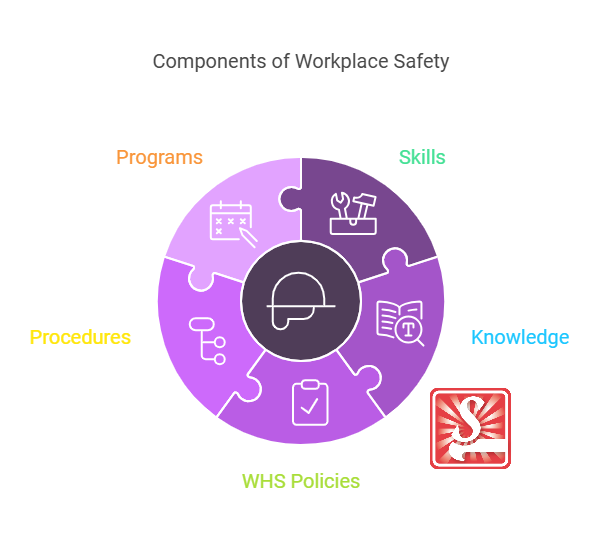
Assisting with workplace safety integrates with health monitoring, ergonomic assessments, and environmental management. It ensures that all safety elements such as training, equipment maintenance, and compliance checks are cohesively managed, creating a comprehensive safety strategy across the enterprise.
Where can the student go to find out more information about assisting with maintaining workplace safety?
What job roles would be knowledgeable about assisting with maintaining workplace safety?
Knowledgeable roles include:
- Safety Officers
- Human Resources Managers
- Occupational Health Specialists
- Workplace Trainers
- Compliance Officers
What is assisting with maintaining workplace safety like in relation to sports, family, or schools?

In sports, maintaining workplace safety is similar to athletes using protective gear and following safety protocols for injury prevention. At home, it’s akin to childproofing a house and maintaining safety routines. In schools, it mirrors the enforcement of rules to keep students safe, such as fire drills and safe classroom layouts, teaching students to identify and avoid hazards.
(The first edition of this post was generated by AI to provide affordable education and insights to a learner-hungry world. The author will edit, endorse, and update it with additional rich learning content.)
- About the Author
- More info

Workskill training for all

 Post Tagged with