
WHS Competence When Assisting with Maintaining Workplace Safety
Posted by SkillMaker in Dec, 2024
What is a concise description of WHS competence when assisting with maintaining workplace safety?

WHS (Work Health and Safety) competence when assisting with maintaining workplace safety involves having the knowledge, abilities, and skills necessary to identify hazards, assess risks, and apply effective measures to control workplace dangers. This competence ensures that all safety procedures adhere to established regulations and standards, thus protecting the health and well-being of all employees.
Why do people in enterprises need WHS competence when assisting with maintaining workplace safety?
WHS competence is essential for individuals within enterprises to facilitate a safe working environment. Understanding and implementing correct safety practices helps prevent accidents, injuries, and illnesses. Additionally, it ensures compliance with legal obligations, which can prevent costly fines and enhance the company’s reputation as a responsible employer.
“Having WHS competence means being proactive about safety, turning potential hazards into manageable tasks, not just compliance checkboxes.”
What are the key components or elements of WHS competence when assisting with maintaining workplace safety?
Key components of WHS competence include:
- Risk Identification: Ability to recognize potential safety hazards in the workplace.
- Risk Assessment: Evaluating the likelihood and consequences of identified risks.
- Control Measures: Implementing strategies to eliminate or reduce risks.
- Regulatory Compliance: Adhering to WHS laws and guidelines.
- Communication: Effectively conveying safety issues and procedures to all stakeholders.
What key terms, with descriptions, relate to WHS competence when assisting with maintaining workplace safety?
- Hazard: Anything that has the potential to cause harm.
- Risk: The likelihood that a hazard will cause harm, and the severity of the harm.
- Hierarchy of Controls: A system used to minimize or eliminate exposure to risks, ranging from elimination to personal protective equipment (PPE).
- Safety Culture: The shared attitudes, beliefs, and practices related to safety within a workplace.
- Incident Reporting: The process of documenting and analyzing workplace safety incidents to prevent recurrence.
Who is typically engaged with operating or implementing WHS competence when assisting with maintaining workplace safety?
WHS competence is typically facilitated by WHS officers, supervisors, managers, and team leaders. These roles are responsible for maintaining a safe working environment by ensuring compliance with safety protocols and facilitating ongoing safety training and awareness programs.
How does WHS competence when assisting with maintaining workplace safety align or integrate with other components of Workplace Safety?
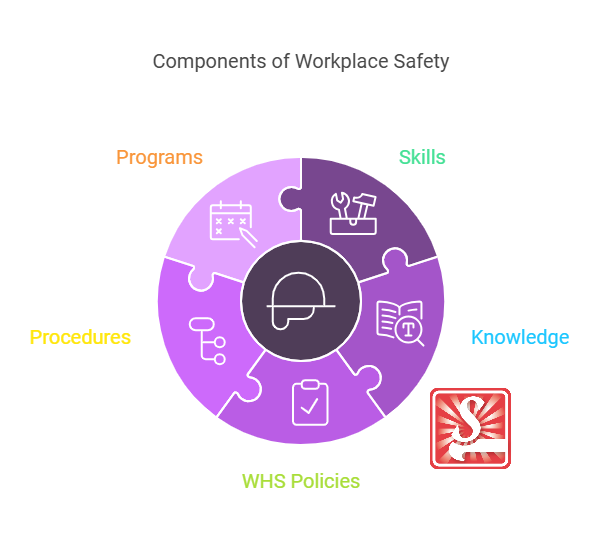
WHS competence integrates with other workplace safety components by providing a framework for systematic risk management and continuous improvement. It aligns with comprehensive safety management systems, emergency protocols, and employee wellness programs, creating an intricate network focused on safeguarding workplace health and safety.
Where can the student go to find out more information about WHS competence when assisting with maintaining workplace safety?
What job roles would be knowledgeable about WHS competence when assisting with maintaining workplace safety?
Roles include:
- WHS Officers
- Safety Inspectors
- Health and Safety Representatives
- Occupational Health Professionals
- WHS Consultants
What is WHS competence when assisting with maintaining workplace safety like in relation to sports, family, or schools?

In sports, WHS competence is like a coach devising play strategies and training athletes with safety in mind. Within a family, it’s akin to parents setting rules and boundaries to ensure everyone’s safety at home. In a school setting, it reflects the structured approach of teachers managing students’ environments to prevent accidents and enhance learning experiences.
(The first edition of this post was generated by AI to provide affordable education and insights to a learner-hungry world. The author will edit, endorse, and update it with additional rich learning content.)
- About the Author
- More info

Workskill training for all

 Post Tagged with