
Understanding Legislative Requirements in Workplace Safety
Posted by SkillMaker in Dec, 2024
What is a concise description of legislative requirements in workplace safety?

Legislative requirements in workplace safety refer to the laws and regulations enacted to ensure safe working conditions. These requirements mandate compliance with safety standards, risk assessments, and employee training to prevent workplace injuries and create a secure work environment.
Why do people in enterprises need to understand legislative requirements in workplace safety?
Understanding legislative requirements in workplace safety is essential for enterprises to protect employees from harm, reduce legal liabilities, and avoid financial penalties associated with non-compliance. By adhering to these regulations, organizations demonstrate a commitment to safety, which can enhance their reputation and operational efficiency.
“Compliance with workplace safety legislation is not just a legal obligation, but a moral duty to ensure the well-being of all employees.”
What are the key components or elements of legislative requirements in workplace safety?
Key components of legislative requirements in workplace safety include:
- Risk Management: Identifying and mitigating potential hazards.
- Training and Induction: Educating employees about safety protocols.
- Incident Reporting: Documenting and responding to workplace incidents and near misses.
- Regular Audits: Conducting safety inspections and assessments.
- Emergency Preparedness: Establishing procedures for potential emergencies.
What key terms, with descriptions, relate to legislative requirements in workplace safety?

Registered Trademark®
- Work Health and Safety (WHS) Act: The primary legislation providing a framework to protect the health, safety, and welfare of workers and others.
- Hazard Identification: The process of identifying potential sources of harm in the workplace.
- Duty of Care: The legal obligation to ensure the safety or well-being of others.
- Personal Protective Equipment (PPE): Equipment worn to minimize exposure to hazards.
- Safety Management System (SMS): A systematic approach to managing safety, including policies and procedures.
Who is typically engaged with operating or implementing legislative requirements in workplace safety?
Workplace Safety Officers, Health and Safety Representatives, Supervisors, and Human Resources personnel are typically responsible for implementing legislative requirements in workplace safety. They ensure compliance by conducting training, inspections, and audits, and by fostering a culture of safety.
How do legislative requirements in workplace safety align or integrate with other components of Workplace Safety?
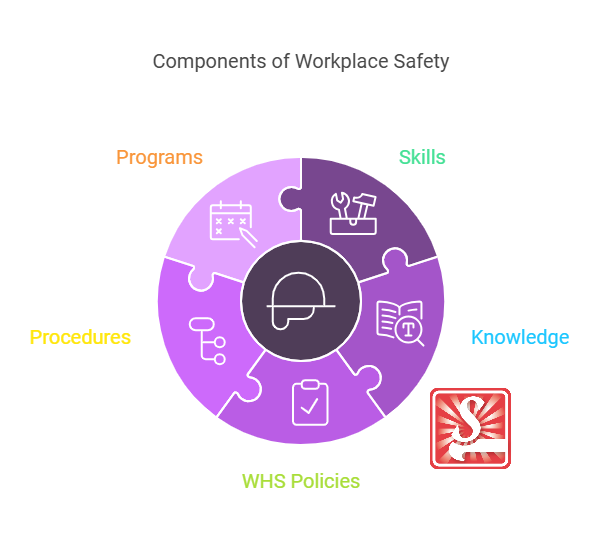
Legislative requirements in workplace safety integrate with workplace policies, employee training, and risk management processes to create a holistic safety culture. These components work in unison to ensure that safety is maintained and continuously improved, supporting organizational compliance and worker protection.
Where can the student go to find out more information about legislative requirements in workplace safety?
- Safe Work Australia: National policy body for work health and safety and workers’ compensation
- WorkSafe QLD: Government agency responsible for workplace safety in Queensland
- Fair Work Ombudsman: Provides information on Australia’s workplace rights and rules
What job roles would be knowledgeable about legislative requirements in workplace safety?
Roles include:
- Workplace Safety Officers
- Health and Safety Representatives
- Compliance Officers
- Human Resources Personnel
- Supervisors and Team Leaders
- Safety Trainers
What are legislative requirements in workplace safety like in relation to sports, family, or schools?

Legislative requirements in workplace safety are akin to following rules in sports, where regulations exist to protect players and ensure fair competition. In a family context, they mirror the guidelines parents establish to keep children safe, such as wearing seatbelts. Within schools, these requirements are similar to policies that ensure student safety through fire drills and anti-bullying campaigns.
(The first edition of this post was generated by AI to provide affordable education and insights to a learner-hungry world. The author will edit, endorse, and update it with additional rich learning content.)
- About the Author
- More info

Workskill training for all

 Post Tagged with