
Safety Requirements When Assisting with Maintaining Workplace Safety
Posted by SkillMaker in Dec, 2024
What is a concise description of the safety requirements when assisting with maintaining workplace safety?

Safety requirements when assisting with maintaining workplace safety involve adhering to established guidelines and practices to ensure a secure and hazard-free environment. This process integrates identifying potential risks, implementing appropriate control measures, and fostering a culture of safety awareness and compliance among all employees.
Why do people in enterprises need safety requirements for maintaining workplace safety?
Enterprises need safety requirements for maintaining workplace safety to protect employees, minimize risk of accidents, and ensure regulatory compliance. Such measures help prevent injuries, reduce the likelihood of costly legal claims, promote worker wellbeing, and enhance overall productivity by reducing downtime caused by workplace incidents.
“Implementing safety requirements in the workplace is crucial for fostering a secure environment, reducing incidents, and ensuring efficient operations.”
What are the key components or elements of safety requirements in workplace safety?
Key components of safety requirements in workplace safety include:
- Risk Assessment: Identifying potential hazards in the workplace.
- Safety Policies: Written guidelines and procedures to ensure a safe working environment.
- Employee Training: Educating staff about safety procedures and emergency protocols.
- Monitoring Compliance: Regular checks to ensure adherence to safety policies.
- Incident Reporting: Systems for documenting and responding to safety concerns or incidents.
What key terms, with descriptions, relate to safety requirements in workplace safety?

Registered Trademark®
- Hazard Identification: The process of recognizing potential sources of danger.
- Personal Protective Equipment (PPE): Equipment worn to minimize exposure to hazards.
- Ergonomics: Designing workspaces to fit the user, reducing strain and injury.
- Safety Data Sheets (SDS): Documents that provide critical information about hazardous chemicals.
- Emergency Procedures: Plans and actions to follow in case of emergencies.
Who is typically engaged with operating or implementing safety requirements in workplace safety?
Safety officers, human resources managers, supervisors, and employees are typically engaged with operating or implementing safety requirements in the workplace. These roles collaborate to ensure that safety protocols are understood, followed, and effectively enforced.
How do safety requirements in workplace safety align or integrate with other components of Workplace Safety?
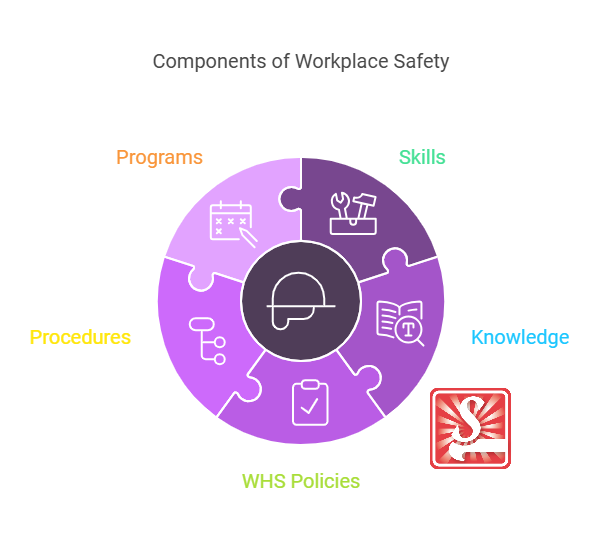
Safety requirements in workplace safety align with risk management strategies by addressing potential threats and establishing preventative measures. This integration ensures not only compliance with safety regulations but also encourages proactive safety culture, necessary for effective hazard mitigation across workplace operations.
Where can the student go to find out more information about safety requirements in workplace safety?
What job roles would be knowledgeable about safety requirements in workplace safety?
Roles include:
- Safety Officers
- Human Resources Managers
- Supervisors
- Health and Safety Representatives
- Compliance Specialists
What is safety requirements in workplace safety like in relation to sports, family, or schools?

In relation to sports, safety requirements in workplace safety can be compared to the rules and gear that ensure safe play and prevent injuries. For families, it is similar to setting household safety norms to minimize accidents. In schools, it parallels the establishment of safety drills and guidelines to protect students and staff during emergencies.
(The first edition of this post was generated by AI to provide affordable education and insights to a learner-hungry world. The author will edit, endorse, and update it with additional rich learning content.)
- About the Author
- More info

Workskill training for all

 Post Tagged with