
Organisational Policies in Assisting with Maintaining Workplace Safety
Posted by SkillMaker in Dec, 2024
What is a concise description of organisational policies when assisting with maintaining workplace safety?

Organisational policies when assisting with maintaining workplace safety involve structured guidelines and protocols that ensure a safe working environment. These policies cover various safety aspects such as hazard identification, risk assessment, incident reporting, emergency procedures, and training requirements. They aim to protect employees, clients, and stakeholders by providing a clear framework for maintaining health and safety standards.
Why do people in enterprises need organisational policies when assisting with maintaining workplace safety?
Enterprises require organisational policies for workplace safety to ensure compliance with legal requirements, reduce the risk of accidents, and promote a culture of safety. These policies help in minimizing workplace injuries, enhancing employee morale, and boosting productivity by fostering a secure work environment. Moreover, they provide a consistent approach to handling safety issues, leading to operational efficiency and peace of mind for employers and employees alike.
“Organisational policies are crucial in fostering a safe workplace environment, ensuring legal compliance, and enhancing overall productivity.”
What are the key components or elements of organisational policies in workplace safety?
Key components of organisational policies in workplace safety include:
- Safety Guidelines: Clear instructions on safe work practices and procedures.
- Risk Assessment: Systematic evaluation to identify and mitigate potential hazards.
- Incident Reporting: Formal processes for documenting safety breaches or accidents.
- Emergency Procedures: Established protocols for dealing with unforeseen situations.
- Training and Awareness: Regular education to enhance safety knowledge among employees.
What key terms, with descriptions, relate to organisational policies in workplace safety?

Registered Trademark®
- Hazard Identification: Process of recognizing potential sources of harm.
- Control Measures: Steps taken to minimize or eliminate risks.
- Occupational Health and Safety (OHS): A discipline focused on protecting the safety, health, and welfare of people at work.
- Compliance: Adherence to laws, regulations, and standards.
- Safety Culture: The attitude, beliefs, perceptions, and values that employees share in relation to safety.
Who is typically engaged with operating or implementing organisational policies in workplace safety?
Roles typically engaged in implementing organisational policies in workplace safety include Safety Officers, Human Resources personnel, Managers, Supervisors, and Health and Safety Representatives. These roles work collaboratively to ensure safety protocols are properly followed and integrated into daily operations.
How do organisational policies in workplace safety align or integrate with other components of Workplace Safety?
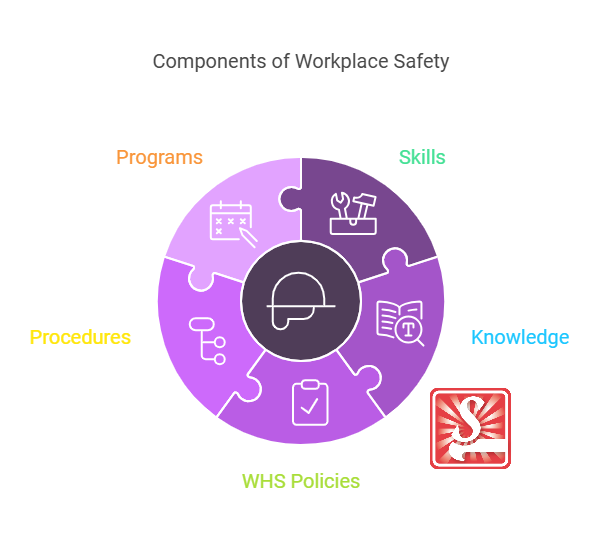
Organisational policies in workplace safety align with other components like safety training, reporting systems, and risk management by providing an overarching framework that guides safe practices. These policies support integrated efforts to maintain compliance, foster a positive safety culture, and ensure all aspects of workplace safety are addressed seamlessly.
Where can the student go to find out more information about organisational policies in workplace safety?
What job roles would be knowledgeable about organisational policies in workplace safety?
Roles include:
- Safety Officers
- Human Resources Personnel
- Operations Managers
- Compliance Officers
- Supervisors
What are organisational policies in workplace safety like in relation to sports, family, or schools?

In sports, organisational policies in workplace safety are similar to rules and regulations that ensure fair play and protect athletes. In a family setting, they resemble household rules that keep family members safe, like childproofing hazards. In schools, they parallel safety rules and emergency drills designed to ensure student and staff safety—each setting relies on consistent guidelines to ensure a safe environment.
(The first edition of this post was generated by AI to provide affordable education and insights to a learner-hungry world. The author will edit, endorse, and update it with additional rich learning content.)
- About the Author
- More info

Workskill training for all

 Post Tagged with