
Relevant Stakeholders When Assisting with Maintaining Workplace Safety
Posted by SkillMaker in Dec, 2024
What is a concise description of relevant stakeholders in maintaining workplace safety?
Relevant stakeholders in workplace safety encompass individuals and groups who have a vested interest in ensuring that safety standards are upheld in the workplace. These stakeholders play a crucial role in developing, implementing, and monitoring safety procedures to protect the well-being of employees, clients, and the public.
Why do people in enterprises need to engage relevant stakeholders for maintaining workplace safety?
Engaging stakeholders is crucial to developing a comprehensive safety program and creating a culture of safety within the organization. Stakeholder involvement ensures that diverse perspectives and expertise are taken into account, facilitating effective risk management, compliance with legislation, and fostering a safer, more cohesive workplace environment.
“Collaborating with relevant stakeholders enhances safety policies and practices, ensures compliance, and creates a safer work environment for everyone involved.”
What are the key components or elements of engaging relevant stakeholders in workplace safety?
Key elements include:
- Consultation: Open dialogue with employees and safety committees.
- Implementation: Coordinated efforts to put safety measures in place.
- Monitoring: Regular reviews of safety practices and policies.
- Feedback: Encouraging input from employees to improve safety.
- Training: Providing necessary resources and education for all.
What key terms, with descriptions, relate to stakeholders in workplace safety?

Registered Trademark®
- Risk Assessment: The systematic identification of potential hazards.
- Compliance: Adhering to safety regulations and standards.
- WHS (Work Health and Safety): A framework for ensuring health and safety in the workplace.
- Safety Audits: Formal inspections to evaluate safety performance.
- Incident Reporting: Documenting and analyzing workplace accidents or near misses.
Who is typically engaged with operating or implementing stakeholder involvement in workplace safety?
Workplace safety is typically the responsibility of safety officers, managers, HR professionals, and health and safety committees. These individuals or groups work collaboratively with employees, regulatory bodies, and external consultants to ensure the implementation and maintenance of safety standards.
How does stakeholder involvement in workplace safety align or integrate with other components of Workplace Safety?
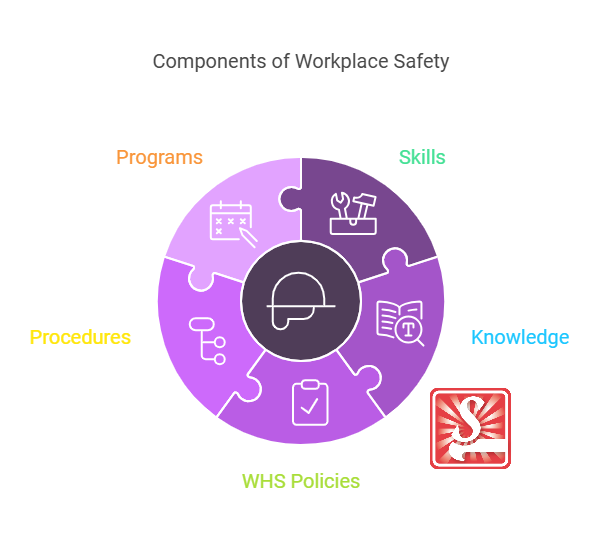
Stakeholder involvement is essential for comprehensive safety management, integrating risk assessment, training, and communication strategies. This approach ensures regular updates, adherence to legislation, and promotes a proactive safety culture across all levels of the organization.
Where can the student go to find out more information about relevant stakeholders in workplace safety?
What job roles would be knowledgeable about stakeholders in workplace safety?
Roles include:
- Workplace Safety Officers
- HR Managers
- Compliance Officers
- Facility Managers
- Health and Safety Advisors
What is stakeholder involvement in workplace safety like in relation to sports, family, or schools?

In sports, engaging stakeholders is similar to a team working together to ensure everyone plays their part safely and effectively.
In a family setting, it is like parents and children collaborating to create a safe and harmonious home environment.
In schools, it’s akin to staff, students, and parents working collectively to establish a secure and supportive learning atmosphere.
(The first edition of this post was generated by AI to provide affordable education and insights to a learner-hungry world. The author will edit, endorse, and update it with additional rich learning content.)
- About the Author
- More info

Workskill training for all

 Post Tagged with