
WHS Considerations in Assisting with Maintaining Workplace Safety
Posted by SkillMaker in Dec, 2024
What is a concise description of WHS issues when assisting with maintaining workplace safety?

Workplace Health and Safety (WHS) issues, when assisting with maintaining workplace safety, involve identifying potential hazards, implementing precautions, and ensuring the overall well-being of employees within the work environment. It’s about adhering to safety protocols, providing adequate training, and fostering a culture of safety across the organization to prevent accidents and injuries.
Why do people in enterprises need WHS considerations in assisting with maintaining workplace safety?
Enterprises need WHS considerations to protect the health and safety of their employees, which is crucial for employee morale and productivity. Proper management of WHS issues helps in the reduction of workplace incidents and aligns with legal requirements, thereby minimizing legal liabilities and fostering a positive business reputation.
“WHS considerations are essential for building a safe and productive work environment, ensuring employee well-being and compliance with legal obligations.”
What are the key components or elements of WHS issues when assisting to maintain workplace safety?
Key components of WHS issues include:
- Hazard Identification: Recognizing potential sources of harm.
- Risk Assessment: Evaluating the significance of identified hazards.
- Safety Training: Providing education and guidance to employees.
- Emergency Preparedness: Developing action plans for potential incidents.
- Monitoring Compliance: Ensuring adherence to safety policies and procedures.
What key terms, with descriptions, relate to WHS issues in workplace safety?

Registered Trademark®
- WHS Management System (WMS): Framework for managing health and safety responsibilities.
- Personal Protective Equipment (PPE): Clothing and gear designed to minimize exposure to hazards.
- Incident Reporting: Documenting and investigating workplace accidents and near misses.
- Safety Audit: Systematic evaluation of an organization’s health and safety standards.
- Hazard Control: Measures to eliminate or reduce risks associated with workplace hazards.
Who is typically engaged with operating or implementing WHS issues in workplace safety?
Employees such as safety officers, health and safety representatives, supervisors, managers, and all other staff members play a role in implementing WHS issues. They collaborate to develop, follow, and enforce safety protocols to ensure a safe working environment for everyone in the organization.
How do WHS issues align or integrate with other components of Workplace Safety?
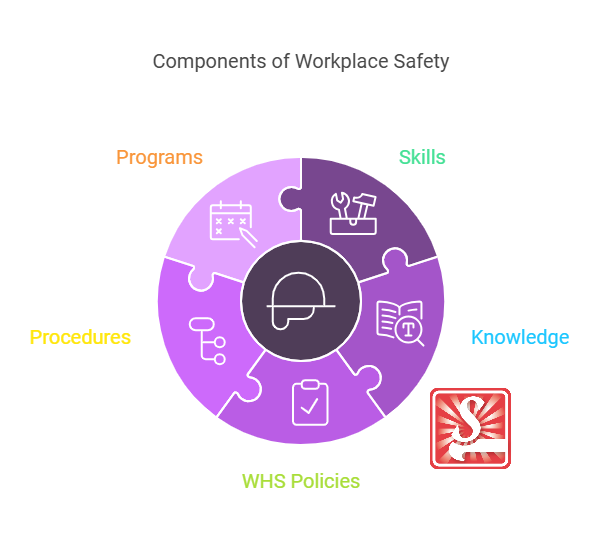
WHS issues integrate seamlessly with other components of Workplace Safety by promoting risk management and safety culture. This integration involves strategic planning and policy alignment ensuring compliance and providing infrastructures such as communication systems and response protocols to enhance safety measures across all levels of an organization.
Where can the student go to find out more information about WHS issues in workplace safety?
What job roles would be knowledgeable about WHS issues in workplace safety?
Roles include:
- Health and Safety Officers
- Risk Managers
- Compliance Officers
- Safety Engineers
- HR Managers with WHS responsibilities
What is WHS issues in workplace safety like in relation to sports, family, or schools?

WHS issues in workplace safety are similar to sports teams identifying risks and injuries, training to enhance team safety, and establishing rules to avoid harm. In a family, it’s akin to educating children on safety precautions at home. In schools, it involves implementing safe practices and protocols to ensure a hazard-free learning environment, much like adhering to WHS principles at work.
(The first edition of this post was generated by AI to provide affordable education and insights to a learner-hungry world. The author will edit, endorse, and update it with additional rich learning content.)
- About the Author
- More info

Workskill training for all

 Post Tagged with