
Work Team Engagement When Assisting with Maintaining Workplace Safety
Posted by SkillMaker in Dec, 2024
What is a concise description of work team engagement in maintaining workplace safety?

Work team engagement in maintaining workplace safety involves actively involving team members in safety practices and initiatives to create an environment where health and safety are prioritized. It means fostering a culture of collaboration, open communication, and shared responsibility among employees to identify and address potential hazards, ensuring everyone plays a part in securing a safe workplace.
Why do people in enterprises need work team engagement for workplace safety?
Enterprises need work team engagement for workplace safety because it empowers employees to take proactive roles in safeguarding their environment. Engaged teams are more likely to adhere to safety protocols, identify risks early, and contribute to developing solutions. This collective effort helps prevent accidents, reduces downtime, and fosters a culture of vigilance and care where safety becomes a shared goal rather than a mandated rule.
“Team engagement in workplace safety serves as a cornerstone for a proactive safety culture, where the collective vigilance of employees leads to safer, more productive work environments.”
What are the key components or elements of work team engagement in workplace safety?
Key components of work team engagement in workplace safety include:
- Open Communication: Encouraging dialogue about safety concerns and suggestions.
- Collaborative Training: Participatory learning sessions about safety protocols.
- Shared Responsibility: Empowering all team members to take part in safety initiatives.
- Recognition of Contributions: Acknowledging team efforts and innovations in improving safety.
- Feedback Mechanisms: Channels to provide and receive constructive safety feedback.
What key terms, with descriptions, relate to work team engagement in workplace safety?

Registered Trademark®
- Safety Culture: The collective values and practices that shape safety behaviors within an organization.
- Empowerment: Enabling team members to take ownership of their safety responsibilities.
- Team Dynamics: The interactions and relationships among team members that influence their collaboration on safety tasks.
- Hazard Identification: The process of recognizing potentially harmful situations or materials.
- Incident Reporting: The documentation and analysis of safety incidents to prevent recurrence.
Who is typically engaged with operating or implementing work team engagement in workplace safety?
Supervisors, safety officers, team leaders, and all employees are responsible for fostering work team engagement in maintaining workplace safety. These roles ensure that safety practices are communicated, understood, and implemented effectively, promoting an inclusive approach where each member is an active contributor to the safety culture.
How does work team engagement in workplace safety align or integrate with other components of Workplace Safety?
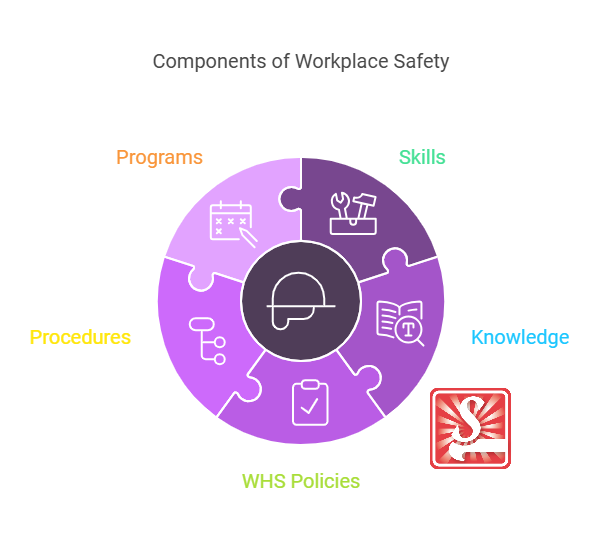
Work team engagement in workplace safety seamlessly integrates with other safety components by enhancing compliance, improving hazard response, and supporting risk management strategies. Engaged teams are better equipped to implement safety plans, conduct audits, and ensure adherence to legislation and standards, thus creating a cohesive and comprehensive safety approach.
Where can the student go to find out more information about work team engagement in workplace safety?
- Safe Work Australia Resources
- WorkSafe Victoria Publications
- Australian Institute of Health & Safety
What job roles would be knowledgeable about work team engagement in workplace safety?
Roles include:
- Safety Officers
- Team Leaders
- Supervisors
- Human Resource Managers
- Operations Managers
What is work team engagement in workplace safety like in relation to sports, family, or schools?

In relation to sports, engaging teams in workplace safety resembles a coach who inspires and mobilizes players to work together, ensuring each member understands their role in achieving a safe and successful game.
In a family setting, it resembles a family where each person contributes to maintaining a safe, harmonious home environment.
In schools, it is similar to teachers and students creating a safe learning space through mutual respect and adherence to safety rules.
(The first edition of this post was generated by AI to provide affordable education and insights to a learner-hungry world. The author will edit, endorse, and update it with additional rich learning content.)
- About the Author
- More info

Workskill training for all

 Post Tagged with