
Understanding Individual Needs in Providing Individualised Support
Posted by SkillMaker in Jan, 2025
What is a concise description of understanding individual needs in individualised support?

Understanding individual needs in the context of providing individualised support involves recognising and accommodating the unique preferences, goals, and challenges of each person receiving care or assistance. This approach ensures that support services are tailored to enhance the individual’s wellbeing, independence, and quality of life.
Why do people in enterprises need to understand individual needs in providing individualised support?
People in enterprises need to understand individual needs to deliver support that is relevant and effective, fostering a more inclusive and person-centred care environment. This understanding enhances client satisfaction, improves outcomes, and contributes to the development of a responsive and flexible support system that aligns with contemporary values in health and community services.
“Understanding individual needs is crucial for delivering support that respects uniqueness, promotes autonomy, and enriches lives.”
What are the key components or elements of understanding individual needs in individualised support?
Key components include:
- Comprehensive Assessment: Identifying specific needs, preferences, and goals of the individual.
- Communication Skills: Engaging effectively to gather and exchange information.
- Empathy and Respect: Valuing the individuality and dignity of each person.
- Collaboration: Involving the individual and relevant stakeholders in planning and decision-making.
- Flexibility and Adaptability: Adjusting support strategies based on changing needs and circumstances.
What key terms, with descriptions, relate to understanding individual needs in individualised support?

Registered Trademark®
- Person-Centred Approach: A method that places the individual at the core of service planning and delivery.
- Support Plan: A documented strategy outlining the specific support requirements and goals of an individual.
- Inclusive Practice: An approach ensuring all services and environments are accessible and welcoming to everyone.
- Interpersonal Skills: The skills required to interact effectively and harmoniously with others.
- Holistic Care: Addressing physical, emotional, social, and spiritual needs in support provision.
Who is typically engaged with operating or implementing the understanding of individual needs in individualised support?
Support workers, case managers, healthcare providers, and community service professionals typically engage in understanding and implementing individual needs in individualised support. They ensure the tailored delivery of services that meet the unique requirements of each individual.
How does understanding individual needs align or integrate with other components of Health or Community Services in Australia?
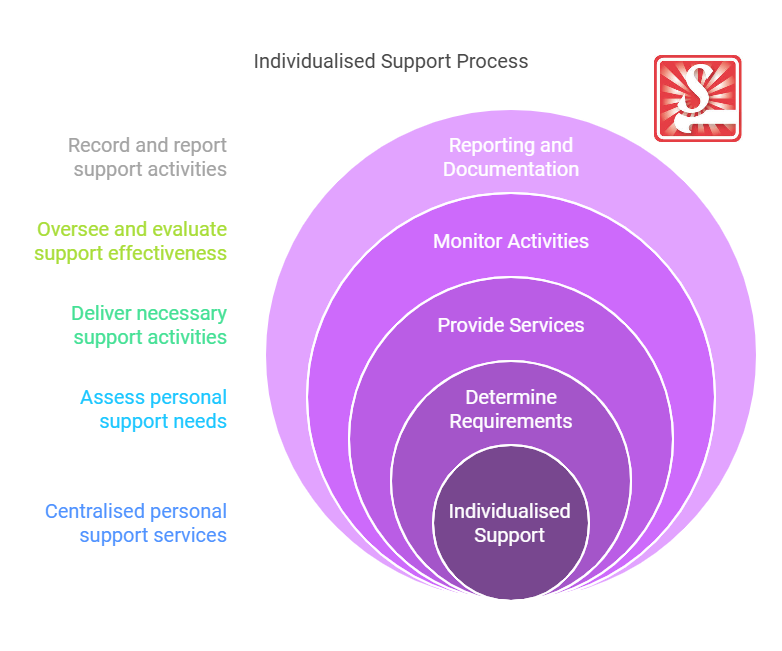
Understanding individual needs aligns with the broader objectives of Health and Community Services by supporting client-centred care, enhancing quality of life, and promoting equity and access to services across diverse populations. This alignment facilitates holistic and integrated service delivery.
Where can the student go to find out more information about understanding individual needs in individualised support?
- Department of Health, Australia
- Australian Government Department of Social Services
- National Disability Insurance Scheme (NDIS)
- Skillmaker
What job roles would be knowledgeable about understanding individual needs in individualised support?
Roles knowledgeable about this topic include:
- Support Workers
- Case Managers
- Healthcare Providers
- Community Service Workers
- Counsellors
What is understanding individual needs like in relation to sports, family, or schools?

In sports, understanding individual needs is like a coach tailoring training to each athlete’s strengths and weaknesses. In a family context, it mirrors the care provided to suit the unique needs of each family member. In schools, this understanding guides personalised education plans to support diverse student learning styles and requirements.
(The first edition of this post was generated by AI to provide affordable education and insights to a learner-hungry world. The author will edit, endorse, and update it with additional rich learning content.)
- About the Author
- More info

Workskill training for all

 Post Tagged with